

Chinese citizens cannot use K-ETA to enter South Korea. China is not on the list of K-ETA eligible countries, which means Chinese passport holders must apply for a regular South Korean visa at an embassy or consulate before traveling. However, there are important exceptions: group tour visa-free entry (15 days), transit visa exemption (30 days with a valid US/UK/Canada/Australia visa), and Jeju Island visa-free entry (30 days).
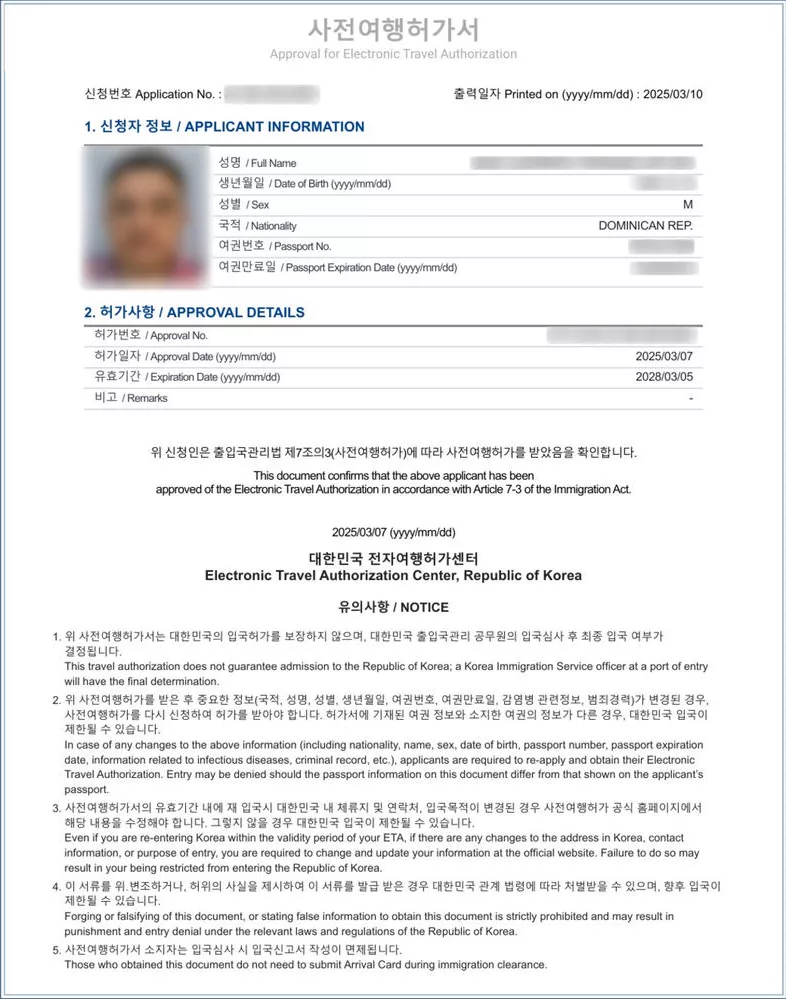
Do Chinese Citizens Need K-ETA?
No. Chinese citizens are not eligible for K-ETA (Korea Electronic Travel Authorization). The K-ETA system is designed for nationals of visa-exempt countries – approximately 110 countries whose citizens can enter South Korea without a visa for short stays. China is not on this list.
This means that if you hold a Chinese passport, you cannot apply for K-ETA at k-eta.go.kr. Instead, you must obtain a South Korean visa through the standard application process at a Korean embassy or consulate.
For a full list of which nationalities can use K-ETA, see our guide on K-ETA required countries.
What Visa Do Chinese Citizens Need for South Korea?
Chinese citizens generally need one of the following visas to enter South Korea:
| Visa Type | Purpose | Duration | Key Requirements |
|---|---|---|---|
| C-3 Short-Term Visit | Tourism, family visit | Up to 90 days | Passport, application form, photo, financial proof |
| C-3-9 Group Tourism | Group tours (3+ people) | Up to 15 days | Registered tour operator, group of 3+ |
| B-2 Transit | Transit through Korea | Up to 30 days | Valid visa for US/Canada/Australia/NZ/EU |
| D-2 Study | University study | Duration of program | University admission letter |
| E-2 Teaching | English language teaching | 1-2 years | Bachelor’s degree, clean criminal record |
| D-4 General Training | Language study, training | 6-12 months | Enrollment proof, financial guarantee |
| F-2 Residency | Long-term residency | 1-3 years | Eligibility criteria vary |
The most common visa for Chinese tourists is the C-3 Short-Term Visit visa, which allows stays of up to 90 days for tourism or visiting family.
How to Apply for a South Korea Visa (Chinese Citizens)
The standard application process for Chinese citizens involves these steps:
- Determine your visa type – Identify whether you need a tourist (C-3), transit (B-2), or other visa category.
- Gather required documents – Valid Chinese passport (6+ months validity), completed visa application form, passport-sized photo, proof of financial means (bank statement), flight itinerary, hotel reservation, and employment verification.
- Submit your application – Apply at the nearest Korean Embassy or Consulate in China, or through an authorized visa application center. Major centers are located in Beijing, Shanghai, Guangzhou, Chengdu, Shenyang, Wuhan, and Xi’an.
- Pay the visa fee – Fees vary by visa type (typically CNY 320-640 for a single-entry tourist visa).
- Wait for processing – Standard processing takes 5-7 business days; expedited processing may be available for an additional fee.
- Collect your passport – Pick up your passport with the visa sticker from the embassy/consulate.
For travelers who already hold a valid K-ETA-eligible country visa or residency, see the transit exemption section below.
Can Chinese Citizens Enter South Korea Without a Visa?
Yes, but only in specific circumstances. There are three main visa-free entry options for Chinese passport holders:
1. Group Tour Visa-Free Entry (15 Days)
Since September 29, 2025, Chinese citizens can visit South Korea without a visa for up to 15 days as part of a group tour. The requirements are:
- The group must consist of 3 or more people
- The group must be accompanied by a representative of a registered tour operator that is licensed in both China and South Korea
- The program is valid through December 31, 2026
This is a significant policy change aimed at boosting Chinese tourism to South Korea. The policy was originally introduced in late 2025 and has been extended through the end of 2026.
2. Transit Visa Exemption (Up to 30 Days)
Chinese citizens who hold a valid visa or permanent residency for the following countries can transit through South Korea without a Korean visa for up to 30 days:
- United States (including Guam and Saipan)
- Canada
- New Zealand
- Australia
- 32 European Schengen countries (visa must be a sticker type in passport)
Conditions for transit exemption:
- You must be traveling from or to the country where you hold a valid visa/residency
- You must have a confirmed onward flight ticket departing within 30 days
- You must not have been denied entry to South Korea in the past 3 years
- You must not have received a fine of KRW 5 million or more or deportation due to illegal stay
- If transiting through a third country, you must stay there for no more than 3 days before entering Korea
Example of allowed transit:
- USA → South Korea → China ✅
- China → South Korea → USA ✅
- USA → South Korea → Third Country ✅
Example of NOT allowed transit:
- USA → South Korea → USA (returning to origin) ❌
- China → South Korea → China (returning to origin) ❌
This transit exemption was resumed on April 30, 2023, and remains active. Contact the Korean Immigration Office at +82-2-2100-1345 for specific questions.
For travelers who also hold US citizenship or residency, see our guide on K-ETA for US citizens for comparison.
3. Jeju Island Visa-Free Entry (30 Days)
All passport holders, including Chinese citizens, can visit Jeju Island without a visa for up to 30 days under the Jeju Visa Waiver Program. However, there are strict conditions:
- You must enter Jeju via a direct international flight landing at Jeju International Airport
- You must obtain a K-ETA approval before your flight
- You cannot travel to mainland South Korea (Seoul, Busan, etc.) from Jeju without a separate visa
This is a good option for Chinese tourists who want to visit Jeju Island exclusively for a beach vacation or short trip.
K-ETA vs South Korea Visa for Chinese Citizens
Since Chinese citizens cannot use K-ETA, the comparison is straightforward:
| Feature | K-ETA | South Korea Visa |
|---|---|---|
| Available to Chinese citizens? | No | Yes |
| Application method | Online (k-eta.go.kr) | Embassy/Consulate in China |
| Processing time | Within 72 hours | 5-7 business days |
| Fee | KRW 10,000 (~$7-8 USD) | CNY 320-640 (varies by type) |
| Validity | 2 years (multiple entry) | Single or multiple entry |
| Stay duration | Up to 90 days | Up to 90 days (C-3) |
| Required documents | Passport, photo | Passport, photo, financial proof, itinerary, employment letter |
For a detailed comparison of when each applies, see our guide on K-ETA vs South Korea visa.
Key takeaway: If you hold a Chinese passport, focus on the visa application process rather than K-ETA. The group tour exemption and transit exemption are the only scenarios where you can enter South Korea without a visa.
South Korea Entry Requirements for Chinese Citizens
In addition to a valid visa (or qualifying exemption), Chinese citizens entering South Korea must meet these requirements:
- Valid Chinese passport with at least 6 months remaining validity
- Completed arrival card – South Korea now uses an e-Arrival Card system that must be filled out online before arrival
- Fingerprinting – South Korea requires fingerprint scans of all foreign visitors at immigration
- Return or onward flight ticket – Proof that you intend to leave South Korea within your authorized stay
- Proof of accommodation – Hotel reservation or invitation letter from a host
- Sufficient funds – Evidence that you can support yourself during your stay
e-Arrival Card for Chinese Travelers
Since 2023, South Korea has required all foreign visitors to complete an e-Arrival Card online before arriving. This replaces the traditional paper arrival card. Chinese citizens should fill out the e-Arrival Card at least 24 hours before their flight. The form collects basic travel information, passport details, and accommodation in South Korea.
Learn more about the South Korea e-Arrival Card and how to complete it.
K-ETA Exemption Period (2023-2026)
For travelers from K-ETA eligible countries (not China), the K-ETA requirement has been temporarily suspended from April 1, 2023, through December 31, 2026. This means that citizens of approximately 110 countries can currently enter South Korea without applying for K-ETA.
However, K-ETA will become mandatory again on January 1, 2027. From that date, all travelers from visa-exempt countries must obtain K-ETA approval before departing for South Korea.
This exemption does not affect Chinese citizens because China was never on the K-ETA eligible list. Chinese passport holders need a visa regardless of the K-ETA exemption status.
For the latest information on which countries are affected, see our Korea visa exemption guide.
Important Warnings for Chinese Travelers
Beware of Scam K-ETA Websites
The official K-ETA application website is www.k-eta.go.kr. The official application fee is KRW 10,000 (approximately $7-8 USD). Be cautious of third-party websites that:
- Charge inflated fees ($50-100+) for K-ETA applications
- Claim to offer “expedited” K-ETA processing
- Request payment in foreign currencies at inflated exchange rates
While Chinese citizens cannot use K-ETA, it is important to know that these scam sites exist and target travelers from all countries. Always verify you are on the official Korean government website.
Visa Overstay Consequences
South Korea takes immigration violations seriously. Chinese citizens who overstay their visa may face:
- Fines of up to KRW 20 million
- Deportation and a re-entry ban (typically 1-5 years)
- Detention at an immigration facility during deportation proceedings
- Difficulty obtaining future visas for South Korea and other countries
The South Korean government has reported concerns about Chinese nationals overstaying visas in the past, particularly on student (D-2) and work visas. Immigration authorities conduct regular checks and have fingerprinting systems in place at all ports of entry.
Frequently Asked Questions
Can Chinese citizens apply for K-ETA?
No. Chinese citizens are not eligible for K-ETA. China is not on the list of visa-exempt countries for South Korea. Chinese passport holders must apply for a regular South Korean visa at an embassy or consulate.
Can Chinese tourists visit South Korea without a visa?
Yes, but only in limited circumstances. Chinese citizens can visit South Korea visa-free for up to 15 days as part of a registered group tour (3+ people, valid through December 31, 2026). They can also transit through Korea for up to 30 days if they hold a valid US, Canadian, Australian, or New Zealand visa.
How long can Chinese citizens stay in South Korea with a tourist visa?
A standard C-3 short-term visit visa allows stays of up to 90 days. The group tour exemption allows up to 15 days. The transit exemption allows up to 30 days.
Do Chinese citizens need a transit visa for South Korea?
It depends. If you hold a valid visa or permanent residency for the US, Canada, Australia, New Zealand, or a Schengen country, you can transit through South Korea for up to 30 days without a Korean visa. Otherwise, you need a transit visa (B-2).
Can Chinese citizens visit Jeju Island without a visa?
Yes. All passport holders, including Chinese citizens, can visit Jeju Island without a visa for up to 30 days. You must fly directly to Jeju International Airport and obtain K-ETA approval before your flight. You cannot travel to mainland South Korea from Jeju without a separate visa.
How much does a South Korea visa cost for Chinese citizens?
A single-entry tourist visa (C-3) typically costs CNY 320-640, depending on the visa type and processing speed. The fee is paid at the Korean embassy, consulate, or authorized visa application center in China. Expedited processing is available for an additional fee.
What documents do Chinese citizens need for a South Korea visa?
Required documents include: valid Chinese passport (6+ months validity), completed visa application form, passport photo, proof of financial means (bank statement), flight itinerary, hotel reservation, and employment verification letter. Additional documents may be required depending on the visa type.
When will K-ETA become mandatory again?
K-ETA will become mandatory for all eligible travelers (citizens of visa-exempt countries) starting January 1, 2027. However, this does not affect Chinese citizens, as China is not on the K-ETA eligible list. Chinese passport holders will still need a visa regardless of K-ETA status.
Where can Chinese citizens apply for a South Korea visa?
Chinese citizens can apply at Korean Embassies and Consulates in China, located in Beijing, Shanghai, Guangzhou, Chengdu, Shenyang, Wuhan, and Xi’an. You can also apply through authorized visa application centers in major Chinese cities.
Is the South Korea group tour visa-free policy permanent?
No. The group tour visa-free entry for Chinese citizens is valid from September 29, 2025, through December 31, 2026. It may be extended or made permanent depending on diplomatic relations and tourism policy decisions between South Korea and China.