

K-ETA exemption currently applies to nationals of 22 countries and regions through December 31, 2026. If you hold a passport from one of these locations, you do not need to apply for a Korea Electronic Travel Authorization before visiting South Korea. Additionally, travelers under 18 or over 65 from any visa-free country are automatically exempt. This guide covers every exemption category, the full country list, and what changes when the exemption ends on January 1, 2027.
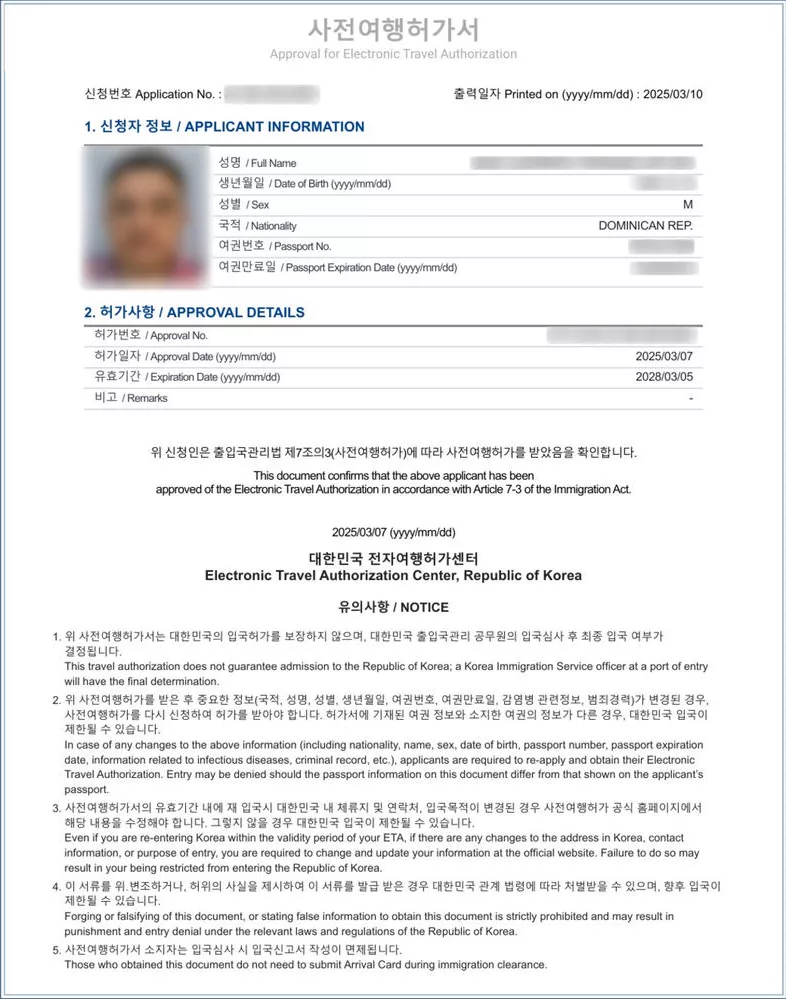
What Is a K-ETA Exemption?
A K-ETA exemption means you can enter South Korea without obtaining a Korea Electronic Travel Authorization in advance. Normally, travelers from visa-waiver countries must apply for K-ETA before departure. However, the South Korean government has temporarily waived this requirement for certain nationalities to boost tourism under the “Visit Korea Year” initiative.
There are three main types of K-ETA exemption:
- Country-based temporary exemption — 22 countries and regions exempt through December 31, 2026
- Age-based exemption — travelers under 18 or over 65 from any visa-free country
- Additional unannounced exemptions — 40+ countries shown via popup on the official K-ETA portal
If you are exempt, you can board your flight to South Korea without a K-ETA approval. However, you will still need to submit an e-Arrival Card before arrival.
The 22 Officially K-ETA Exempt Countries (2026)
The Ministry of Justice extended the temporary K-ETA exemption for 22 countries and regions from January 1, 2026 through December 31, 2026. If you hold a passport from any of these locations, you do not need K-ETA for the remainder of 2026.
Asia (5 countries/regions)
| Country/Region | Visa-Free Stay Duration | K-ETA Exempt Until |
|---|---|---|
| Hong Kong | 90 days | Dec 31, 2026 |
| Japan | 90 days | Dec 31, 2026 |
| Macao | 90 days | Dec 31, 2026 |
| Singapore | 90 days | Dec 31, 2026 |
| Taiwan | 90 days | Dec 31, 2026 |
Americas (2 countries)
| Country | Visa-Free Stay Duration | K-ETA Exempt Until |
|---|---|---|
| Canada | 6 months | Dec 31, 2026 |
| United States (incl. Guam) | 90 days | Dec 31, 2026 |
Europe (13 countries)
| Country | Visa-Free Stay Duration | K-ETA Exempt Until |
|---|---|---|
| Austria | 90 days | Dec 31, 2026 |
| Belgium | 3 months | Dec 31, 2026 |
| Denmark | 90 days | Dec 31, 2026 |
| Finland | 90 days | Dec 31, 2026 |
| France | 90 days | Dec 31, 2026 |
| Germany | 90 days | Dec 31, 2026 |
| Italy | 90 days | Dec 31, 2026 |
| Netherlands | 3 months | Dec 31, 2026 |
| Norway | 90 days | Dec 31, 2026 |
| Poland | 90 days | Dec 31, 2026 |
| Spain | 90 days | Dec 31, 2026 |
| Sweden | 90 days | Dec 31, 2026 |
| United Kingdom | 90 days | Dec 31, 2026 |
Oceania (2 countries)
| Country | Visa-Free Stay Duration | K-ETA Exempt Until |
|---|---|---|
| Australia | 90 days | Dec 31, 2026 |
| New Zealand | 3 months | Dec 31, 2026 |
These 22 countries were originally granted a temporary exemption starting April 1, 2023. The exemption has been extended annually, with the current extension covering all of 2026. When you visit the official K-ETA website and scan your passport, a pop-up message will confirm your exemption status.
Additional Countries Exempt from K-ETA
Beyond the 22 officially announced exemptions, the K-ETA portal shows a popup message exempting travelers from more than 40 additional countries. These exemptions are not formally announced by the Ministry of Justice but are applied automatically during the application process.
Asia (8 countries)
Bahrain, Brunei, Israel, Kuwait, Oman, Qatar, Saudi Arabia, United Arab Emirates
Europe (23 countries)
Andorra, Bulgaria, Croatia, Cyprus, Czech Republic, Estonia, Greece, Holy See (Vatican), Hungary, Iceland, Ireland, Latvia, Liechtenstein, Lithuania, Luxembourg, Malta, Monaco, Portugal, Romania, San Marino, Slovakia, Slovenia, Switzerland
Americas (3 countries)
Chile, Colombia, Mexico
Oceania (11 countries/territories)
Fiji, Kiribati, Marshall Islands, Micronesia, Nauru, New Caledonia, Palau, Samoa, Solomon Islands, Tonga, Tuvalu
Africa (1 country)
South Africa
If your country appears in this list, you will see a popup notification when you attempt to apply for K-ETA on the official portal. The application fee will not be charged, and you can proceed to South Korea without K-ETA approval. For the complete list of all visa-free countries (including those that still require K-ETA), see our guide to K-ETA required countries.
Age-Based K-ETA Exemption
Since July 2023, the South Korean government has applied an age-based K-ETA exemption that applies regardless of nationality. If you are from any visa-free country:
- Under 18 years old — exempt from K-ETA
- 65 years old or older — exempt from K-ETA
- Ages 18 to 64 — K-ETA required (unless your country is on the exemption list above)
This exemption is permanent and is not tied to the temporary 22-country exemption that expires in December 2026. Even after the temporary exemption ends, travelers under 18 and over 65 will continue to be exempt from K-ETA.
K-ETA Exemption vs. Visa-Free Entry: What’s the Difference?
Many travelers confuse K-ETA exemption with visa-free entry, but they are distinct concepts:
| Feature | Visa-Free Entry | K-ETA Exemption |
|---|---|---|
| What it means | You do not need a visa to enter South Korea | You do not need K-ETA to enter South Korea |
| Who qualifies | Nationals of ~111 countries | 22 countries (temporary) + age-based + additional popup countries |
| Duration | Permanent bilateral agreements | Temporary through Dec 31, 2026 |
| Still need K-ETA? | Yes, unless also exempt | No |
| Still need e-Arrival Card? | Yes | Yes |
In short: all K-ETA exempt travelers are also visa-free, but not all visa-free travelers are K-ETA exempt. If you are from a visa-free country that is not on the exemption list, you still need to apply for K-ETA before your trip.
For a broader overview of visa-free entry, read our complete guide to Korea visa exemption.
What Happens When K-ETA Exemption Ends (January 2027)
The current K-ETA temporary exemption is set to expire on December 31, 2026. Starting January 1, 2027, all travelers from visa-waiver countries will once again need to obtain K-ETA approval before departing for South Korea.
Key points about the transition:
- K-ETA applications will become mandatory again for nationals of all ~112 visa-free countries
- The K-ETA fee of KRW 10,000 (~$7-8 USD) will apply to all applicants
- Processing time is up to 72 hours — apply at least 3 days before your flight
- K-ETA validity remains 3 years (or until passport expires), allowing multiple entries
- Age-based exemption (under 18 / over 65) will continue regardless of the temporary exemption status
If you plan to visit South Korea in early 2027, consider applying for K-ETA in late 2026 while it is still optional. A K-ETA approved during the exemption period remains valid for 3 years. Check our guide on K-ETA processing time for current wait times.
Should You Apply for K-ETA Even If Exempt?
Even if your country is on the exemption list, applying for K-ETA voluntarily offers practical benefits:
- Skip the e-Arrival Card — travelers with a valid K-ETA are exempt from submitting the e-Arrival Card, which otherwise must be completed within 3 days before arrival
- Faster immigration — K-ETA holders can use automated Smart Entry Service gates at Korean airports, bypassing manual immigration lines
- Multi-year validity — once approved, K-ETA is valid for 3 years for unlimited entries
- Peace of mind — having K-ETA approval in advance eliminates any uncertainty about entry requirements
The K-ETA application fee is KRW 10,000 (~$7-8 USD) and is non-refundable. For frequent travelers to South Korea, the time saved at immigration alone makes it worthwhile. Learn more about the K-ETA cost and fees.
Jeju Island Visa Waiver
South Korea offers a separate visa waiver program specifically for Jeju Island. Under this program, citizens of most countries can visit Jeju Province without a visa for up to 30 days, regardless of their K-ETA status.
Key conditions:
- Entry must be via direct international flights landing at Jeju International Airport
- Stay is limited to Jeju Province — you cannot travel to mainland South Korea
- K-ETA is still required for Jeju entry (unless you are from an exempt country)
- Duration: 30 days maximum
This program is particularly popular with travelers from countries that normally require a visa for South Korea, as it provides a way to experience Korean culture and scenery without a full visa application.
Transit Visa Exemption
If you are transiting through South Korea, special visa exemptions may apply:
- 24-hour transit — travelers in transit through Incheon Airport do not need a visa if staying in the transit area
- 30-day transit exemption — citizens of non-visa-exempt countries can enter South Korea visa-free for up to 30 days if they hold a valid visa or residence permit from the US, Canada, Australia, New Zealand, or any of the 32 European Schengen-area countries
- Transit Tourism Program — passengers transiting through Incheon can join free organized tours of Seoul (1-5 hours) for a KRW 10,000 entry-procedure fee
The 30-day transit exemption is useful for travelers who want to break up a long journey with a stopover in Seoul. You must be traveling between your country of origin and the country that issued your valid visa.
FAQs About K-ETA Exemption
Do US citizens need K-ETA for South Korea in 2026?
No. US citizens are exempt from K-ETA through December 31, 2026 as part of the temporary 22-country exemption. Starting January 1, 2027, US citizens will need to apply for K-ETA again.
What are the 22 countries exempt from K-ETA?
The 22 K-ETA exempt countries are: Hong Kong, Japan, Macao, Singapore, Taiwan, Canada, United States, Austria, Belgium, Denmark, Finland, France, Germany, Italy, Netherlands, Norway, Poland, Spain, Sweden, United Kingdom, Australia, and New Zealand.
Is K-ETA still required in 2026?
K-ETA is temporarily suspended for 22 countries through December 31, 2026. Travelers from other visa-free countries still need K-ETA. From January 1, 2027, K-ETA will be mandatory for all visa-free nationalities again.
Can I enter South Korea without K-ETA if I am over 65?
Yes. Travelers aged 65 or older from any visa-free country are permanently exempt from K-ETA, regardless of the temporary country-based exemption.
Do I need an e-Arrival Card if I am exempt from K-ETA?
Yes. All foreign travelers entering South Korea must submit an e-Arrival Card within 3 days before arrival, even if they are exempt from K-ETA. The only exception is travelers who have a valid K-ETA, which waives the e-Arrival Card requirement.
Will the K-ETA exemption be extended beyond 2026?
As of July 2026, there is no announcement regarding further extensions. The current exemption expires December 31, 2026, and K-ETA is expected to become mandatory again on January 1, 2027.
What if my country is not on the K-ETA exemption list?
If your country has visa-free entry to South Korea but is not on the exemption list, you must apply for K-ETA before departure. The fee is KRW 10,000 (~$7-8 USD) and processing takes up to 72 hours.
Does K-ETA exemption mean I do not need a visa?
K-ETA exemption means you do not need K-ETA, but it only applies to travelers who are already visa-free. If your country requires a visa for South Korea, K-ETA exemption does not apply to you — you need a visa.