
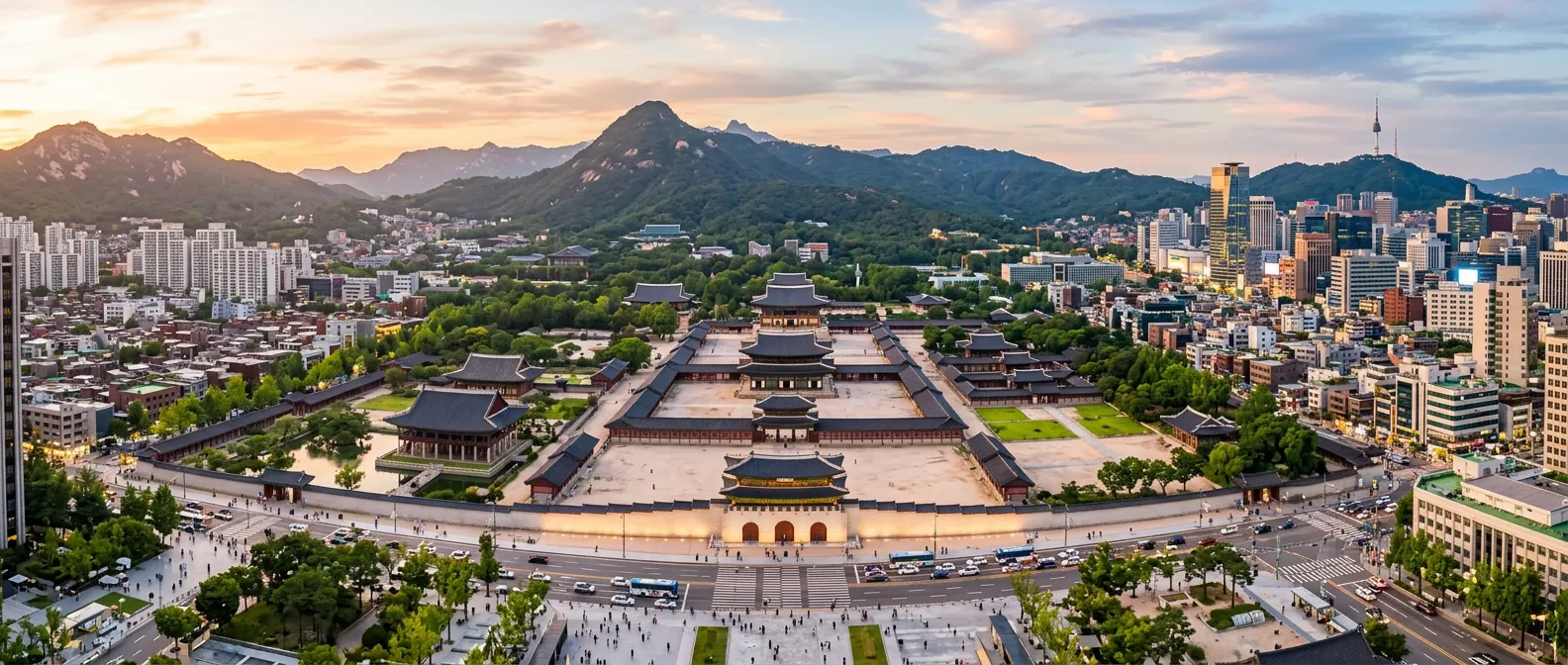
South Korea welcomes over 17 million visitors annually, and depending on your nationality, you may enter visa-free for up to 90 days, qualify for a K-ETA (Korea Electronic Travel Authorization), or need to apply for a traditional visa through a Korean embassy or consulate. This guide covers every entry pathway, the documents you need, and step-by-step instructions for each scenario.
Do You Need a Visa for South Korea?
Whether you need a visa depends on three factors: your nationality, the purpose of your trip, and how long you plan to stay. South Korea classifies foreign visitors into three main categories:
- Visa-free entry – Citizens of approximately 110 countries can enter without a visa for short stays (up to 90 days)
- K-ETA holders – Travelers from visa-exempt countries normally need a Korea Electronic Travel Authorization, though this requirement is currently waived through December 31, 2026
- Visa required – Citizens of non-exempt countries, or anyone planning to work, study, or stay longer than 90 days, must obtain a visa before departure
The fastest way to check your specific situation is to consult the complete list of visa-exempt countries or visit the Korean Visa Portal (visa.go.kr).
Visa-Free Entry for Eligible Nationalities
South Korea has bilateral visa waiver agreements with over 110 countries. The allowed stay duration depends on your nationality:
| Stay Duration | Eligible Countries (Examples) |
|---|---|
| Up to 6 months | Canada |
| Up to 90 days | United States, United Kingdom, Australia, Japan, EU member states, Brazil, Mexico, Argentina, New Zealand |
| Up to 60 days | Thailand, Peru, Russia, Lesotho |
| Up to 30 days | Hong Kong, Taiwan, Macao, Bahrain, Kuwait, Oman, Qatar, Saudi Arabia, UAE |
| Up to 15 days (tour groups) | China (groups of 3+ with registered tour operator) |
To qualify for visa-free entry, you must hold a valid passport with at least 6 months of remaining validity and at least 1-2 blank pages. You should also be prepared to show proof of return or onward travel and your accommodation details.
If you are a US citizen, see our detailed guide on K-ETA requirements for Americans. For Indian nationals, read K-ETA for Indian citizens.
K-ETA: The Electronic Travel Authorization
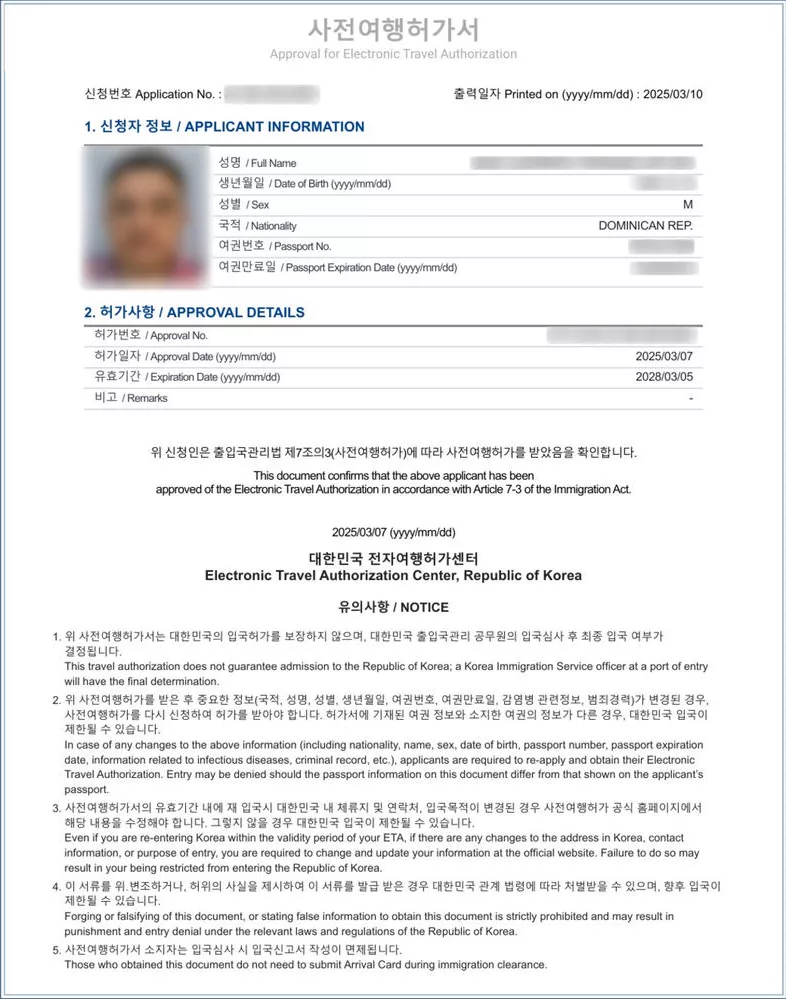
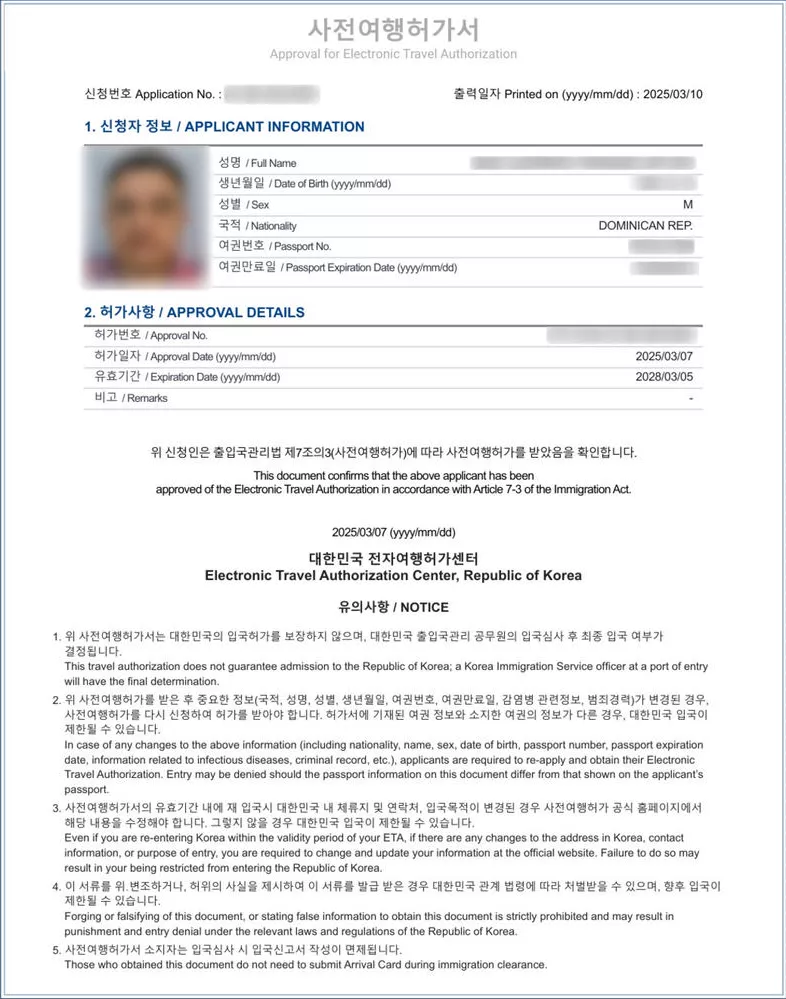
The Korea Electronic Travel Authorization (K-ETA) is an online pre-travel authorization required for citizens of visa-exempt countries. Here is what you need to know:
- Fee: KRW 10,000 (approximately USD 7-8). See our full breakdown of K-ETA costs.
- Validity: 2 years from the date of issue, with multiple entries allowed
- Processing time: Usually approved within 72 hours, but can take up to 2 weeks. Learn more about K-ETA processing times.
- Application: Online at k-eta.go.kr or via the K-ETA mobile app
Current K-ETA Exemption (2026)
The South Korean government has temporarily waived the K-ETA requirement for most eligible nationalities through December 31, 2026. This means you can currently enter South Korea visa-free without a K-ETA if you are from a visa-exempt country. The K-ETA will become mandatory again on January 1, 2027.
For the full list of countries affected by this exemption, see K-ETA Exemption Countries. Not sure whether you need a K-ETA or a full visa? Our K-ETA vs Visa comparison breaks down the differences.
South Korea Visa Types
If you are not from a visa-exempt country, or if your trip purpose requires a long-term stay, you will need to apply for a South Korean visa. The main visa categories are:
| Visa Code | Type | Purpose | Typical Stay |
|---|---|---|---|
| C-1 | Temporary News Coverage | Journalists and media personnel | Up to 90 days |
| C-3 | Short-Term Visit | Tourism, business meetings, medical treatment | Up to 90 days |
| C-4 | Short-Term Employment | Short-term paid activities (e.g., performances) | Up to 90 days |
| D-2 | Study | University undergraduate or graduate programs | Duration of program |
| D-8 | Corporate Investment | Business owners and investors (min. KRW 50 million investment) | 1-5 years |
| E-2 | Foreign Language Teaching | Teaching your native language in Korea | 1-2 years |
| E-7 | Specialized Work | Skilled professionals in designated fields | 1-3 years |
| F-2 | Residency | Spouses of Korean nationals, long-term residents | Varies |
| F-1-D | Digital Nomad | Remote workers employed outside South Korea | Up to 2 years |
| H-1 | Working Holiday | Youth (ages 18-30) from partner countries | Up to 1 year |
The Digital Nomad Visa (F-1-D) is a relatively new option, officially launched on June 30, 2026, after a pilot program that ran from January 2024. It allows remote workers employed by companies outside South Korea to live in the country while working.
General Visa Requirements for South Korea
Regardless of the visa type, all applicants must provide the following core documents:
- Valid passport – Must be valid for at least 6 months beyond your intended entry date with at least 1-2 blank visa pages
- Completed visa application form – Available from the Korean embassy or consulate, or through the Korea Visa Portal
- Passport-sized photographs – Two photos (2 inches by 2 inches), taken within the last 3 months against a white background, with a neutral expression
- Proof of travel arrangements – Round-trip flight itinerary or e-ticket showing entry and exit dates
- Proof of accommodation – Hotel reservation or invitation letter from your host in South Korea
- Financial proof – Bank statements from the last 3 months showing sufficient funds to cover your stay
Additional Requirements by Visa Type
Different visa categories require extra documentation beyond the core requirements:
Business visas (C-3, C-4): A business cover letter from your employer, invitation from a Korean company, or proof of conference registration.
Study visas (D-2): Acceptance letter from a recognized Korean educational institution, proof of tuition payment or scholarship, and academic transcripts.
Work visas (E-2, E-7): Employment contract, criminal background check, health examination (including drug test), sealed university transcripts, and verified degree copies. The E-2 visa specifically requires applicants to be native residents of a country whose mother tongue matches the language they will teach.
Investment visas (D-8): Proof of minimum investment of KRW 50 million (approximately USD 36,000) in a Korean business.
Working Holiday (H-1): Applicants must be between 18 and 30 years old (age limit varies by country) and hold a passport from one of the partner countries with a reciprocal agreement.
Financial Requirements
South Korea does not publish a fixed minimum bank balance for tourist visa applications. However, consular officers typically expect to see evidence that you can financially support yourself during your stay. As a general guideline:
- Short-term tourist stays (up to 90 days): Bank statements showing a balance of at least USD 2,000-5,000 or equivalent
- Long-term stays: Higher amounts depending on visa type and duration
- Students (D-2): Proof of tuition payment plus living expenses (approximately KRW 10-15 million per year)
How to Apply for a South Korea Visa
Follow these steps to apply for a South Korean visa:
- Determine your visa type – Visit the Korea Visa Portal (visa.go.kr) or contact the nearest Korean embassy to identify which visa category matches your travel purpose
- Gather documents – Collect all required documents based on your visa type (see above)
- Complete the application form – Fill out the visa application form online or obtain it from the embassy
- Submit your application – Apply in person at the nearest South Korean embassy or consulate. Some countries allow applications through authorized visa agencies
- Pay the fee – Visa fees vary by type and nationality. Single-entry tourist visas typically cost USD 40-80; multiple-entry visas cost USD 60-120
- Wait for processing – Standard processing takes 5-7 business days. Expedited processing may be available for an additional fee
- Collect your visa – Pick up your passport with the visa sticker from the embassy or have it mailed to you
Can You Apply Online?
South Korea does not offer a fully online visa application system for most visa types. However, you can:
- Complete the application form online through the Korea Visa Portal
- Apply for a K-ETA online if you are from a visa-exempt country
- Submit the e-Arrival Card online within 3 days before arrival (mandatory for all foreign visitors)
- Use authorized third-party visa agencies that handle the submission process on your behalf
Special Entry Programs
South Korea offers several special visa-free programs beyond standard visa exemptions:
Jeju Visa Waiver Program
All passport holders (except citizens of 24 restricted countries) can stay in Jeju Province for up to 30 days without a visa. Visitors must enter Jeju via direct international flights to Jeju International Airport and hold a valid K-ETA approval.
Transit Tourism Program
Passengers transiting through Incheon International Airport can join free organized tours of Seoul. The tours range from 1 to 5 hours, and an entry-procedure fee of KRW 10,000 (approximately USD 10) applies. Citizens of certain restricted countries are not eligible.
30-Day Transit Exemption
Non-visa-exempt travelers who hold a valid visa or residence permit for the US, Canada, Australia, New Zealand, or any of 32 European countries can transit through South Korea visa-free for up to 30 days, provided they meet specific routing requirements.
APEC Business Travel Card
Holders of an APEC Business Travel Card (ABTC) with the “KOR” code can enter South Korea for business trips for up to 90 days without a separate visa.
South Korea e-Arrival Card
Since 2023, all foreign visitors to South Korea must submit an e-Arrival Card within 3 days before arrival. This is a free electronic form that replaces the traditional paper arrival card. Key details:
- Submit online at the Korea Immigration Service website
- Valid for 72 hours after submission
- Not a visa or K-ETA – simply an entry registration form
- Exempt categories: registered Korean residents, valid K-ETA holders, and airline crew members
Overstaying and Visa Extensions
If you overstay your visa or visa-free period in South Korea, you may face fines, deportation, and a ban on re-entry. If you need to extend your stay, apply for a visa extension at the Korea Immigration Service (KIS) before your authorized period expires. Do not wait until the last day, as processing can take several business days.
FAQs About South Korea Visa Requirements
Do US citizens need a visa for South Korea in 2026?
No. US citizens can enter South Korea visa-free for up to 90 days for tourism and business. The K-ETA requirement is also waived through December 31, 2026. From January 1, 2027, US citizens will need a valid K-ETA for entry.
How much bank balance is required for a South Korea visa?
There is no fixed minimum. Consular officers expect to see sufficient funds to cover your stay. For short-term tourist visits, bank statements showing at least USD 2,000-5,000 are generally recommended. Long-term and student visas require higher amounts.
Can I get a South Korea visa on arrival?
No. South Korea does not offer visas on arrival. If you need a visa, you must apply at a Korean embassy or consulate before traveling. Citizens of visa-exempt countries can enter without a visa but must submit an e-Arrival Card before arrival.
How long does it take to get a South Korea visa?
Standard visa processing takes 5-7 business days at most Korean embassies. K-ETA applications are usually processed within 72 hours but can take up to 2 weeks. Apply well in advance of your travel date.
What is the difference between K-ETA and a South Korea visa?
A K-ETA is an electronic travel authorization for citizens of visa-exempt countries visiting for short stays (up to 90 days). It costs KRW 10,000 and is valid for 2 years. A visa is required for non-exempt nationalities or for stays longer than 90 days, and involves a formal application at an embassy with more documentation.
Which countries do not need a visa for South Korea?
Approximately 110 countries have visa-free agreements with South Korea, including the United States, United Kingdom, Canada, Australia, Japan, EU member states, Brazil, Mexico, and many others. Stay durations vary from 15 to 180 days depending on nationality. Check the full list on the Korea Visa Portal.
Do Indian citizens need a visa for South Korea?
Yes. Indian citizens generally need a visa to enter South Korea. However, Indian nationals with a valid US, Canada, Australia, or Schengen visa may qualify for transit exemptions. For detailed requirements, see our guide on K-ETA for Indian citizens.
Can I work in South Korea on a tourist visa?
No. Working in South Korea on a tourist visa (C-3) or while entering visa-free is illegal. If you plan to work, you must obtain the appropriate work visa (E-2, E-7, or C-4) through a Korean embassy or consulate before arrival.
What plugs and voltage does South Korea use?
South Korea uses Type C and F plugs (European standard). The standard voltage is 220V at 60Hz. Travelers from the US and other countries with 110V systems will need a travel adapter and possibly a voltage converter.
Is South Korea safe for tourists?
South Korea is considered one of the safest countries in Asia for tourists. Crime rates are low, public transportation is reliable, and the healthcare system is modern. Exercise normal precautions, especially in crowded areas and nightlife districts.