

K-ETA vs Visa: What Is the Difference?
If you are planning a trip to South Korea, you have probably come across two terms: K-ETA and visa. They sound similar, but they serve very different purposes – and confusing them could leave you stranded at the airport.
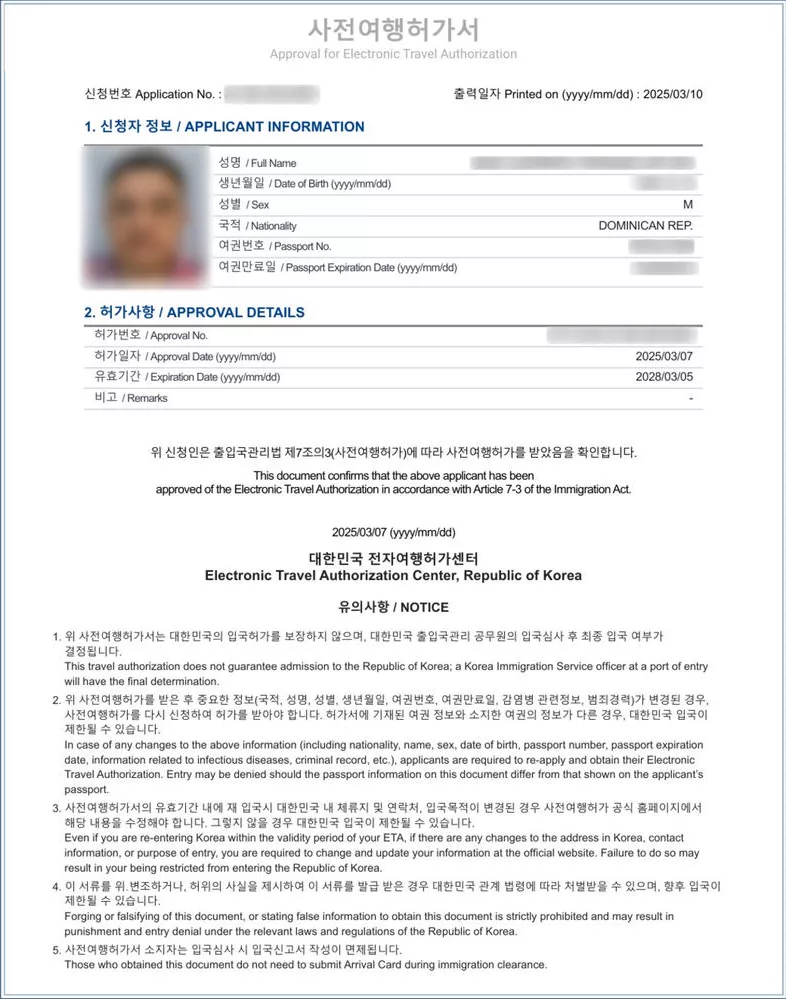
The short answer: K-ETA is not a visa. It is a pre-travel authorization for citizens of visa-exempt countries who are visiting South Korea for short stays. A visa, on the other hand, is a formal permit stamped in your passport that allows entry for specific purposes like work, study, or long-term stays.
This guide breaks down exactly when you need a K-ETA, when you need a visa, and what happens if you get it wrong.
K-ETA at a Glance
The Korea Electronic Travel Authorization (K-ETA) is an online travel permit that was introduced on September 1, 2021. It is designed for nationals of countries that have visa-exemption agreements with South Korea.
Here is what makes K-ETA unique:
- It is applied for entirely online – no embassy visits required
- It is not a visa and does not replace one
- It is meant for short-term visits only (tourism, transit, business meetings, etc.)
- An approved K-ETA does not guarantee entry – the final decision rests with the immigration officer at the port of entry
Who Needs K-ETA?
K-ETA is required for nationals of visa-exempt countries who want to enter South Korea without a visa. This includes citizens of most European Union nations, the United States, Canada, the United Kingdom, Australia, Japan, and many others.
However, there is a major twist in 2026: K-ETA has been temporarily exempted for nationals of 22 countries and regions through December 31, 2026. We will cover this in detail below.
K-ETA Key Facts
| Detail | Information |
|---|---|
| Fee | 10,000 KRW (~$7-8 USD) |
| Processing time | Typically 72 hours or less |
| Validity | 3 years (or until passport expires, whichever is sooner) |
| Entries | Multiple entries within validity period |
| Stay duration | Varies by nationality (30, 60, or 90 days; 6 months for Canada) |
| Application method | Online at [k-eta.go.kr](https://www.k-eta.go.kr/) or via the K-ETA mobile app |
| Refundable? | No, even if the application is denied |
South Korea Visa at a Glance
A South Korea visa is a formal travel document issued by a Korean embassy or consulate. It authorizes you to enter South Korea for a specific purpose and duration.
You need a visa if:
- Your country does not have a visa-exemption agreement with South Korea
- You plan to work, study, or live in South Korea
- Your intended stay exceeds the visa-free period for your nationality
- Your K-ETA application was denied and you still want to travel
Common Visa Types
South Korea offers several visa categories depending on the purpose of your visit:
| Visa Type | Code | Purpose |
|---|---|---|
| Short-term General | C-3 | Tourism, transit, visiting family, conferences |
| Working Holiday | H-1 | Work and travel for young adults (18-30) |
| Student | D-2 | University or academic study |
| Language Training | D-4 | Korean language programs |
| Work (General) | E-1 to E-7 | Employment in various professional fields |
| Corporate Investment | D-8 | Business investment activities |
| Digital Nomad | F-1-D | Remote workers with foreign employment |
| Residency | F-2 | Long-term residency |
K-ETA vs Visa: Side-by-Side Comparison
| Feature | K-ETA | South Korea Visa |
|---|---|---|
| What is it? | Electronic travel authorization | Formal travel permit |
| Is it a visa? | No | Yes |
| Who is it for? | Visa-exempt country nationals | All nationalities (when needed) |
| Purpose | Short-term tourism, transit, business | Tourism, work, study, residency, etc. |
| How to apply | Online | Embassy or consulate |
| Fee | ~10,000 KRW ($7-8) | Varies ($30-$200+ depending on type) |
| Processing time | Up to 72 hours | 5-15 business days (or longer) |
| Validity | 3 years | Varies (single/multiple entry, 3 months to years) |
| Stay limit | 30-90 days per entry (by nationality) | Depends on visa type |
| Guarantees entry? | No | No (immigration officer decides) |
| Work allowed? | No | Yes (with appropriate visa type) |
| Can be extended? | No (reapply for new one) | Some types can be extended in Korea |
When Do You Need K-ETA?
You need a K-ETA if all of the following apply:
- You are a citizen of a visa-exempt country (check the official list)
- You are visiting South Korea for tourism, transit, business meetings, or cultural events
- Your stay will be within the visa-free period for your nationality
- You do not plan to work or study in South Korea
Think of K-ETA as a pre-screening process. It lets Korean immigration verify your information before you board your flight, which speeds up the arrival process. With an approved K-ETA, you also get to skip the arrival card at immigration.
When Do You Need a Visa?
You need a South Korea visa instead of (or in addition to) K-ETA if any of these apply:
- You are from a country that is not visa-exempt for South Korea
- You plan to work in South Korea (any paid employment)
- You plan to study at a Korean institution
- Your stay will exceed the visa-free period (e.g., more than 90 days)
- You need a specific immigration status (residency, investment, etc.)
- Your K-ETA application was rejected and you still want to travel
Can You Use Both K-ETA and a Visa?
According to the official K-ETA website, if you hold both a K-ETA and a valid visa, you will be granted entry based on your visa – not your K-ETA. The visa takes priority.
This means:
- If you have a valid work visa (E-2) and a K-ETA, you enter under your work visa status
- If you have a valid residence card and a K-ETA, your residence card governs your stay
- You can only use K-ETA for entry if you have returned or surrendered any prior residence card
In practice, most travelers will only need one or the other – not both.
K-ETA Exemption in 2026: Do You Still Need It?
This is the big question many travelers are asking right now.
As of 2026, the South Korean government has extended a temporary K-ETA exemption for nationals of 22 countries and regions. This means travelers from these countries can enter South Korea without a K-ETA through December 31, 2026.
The exempted countries include the United States, Canada, Australia, Japan, the United Kingdom, Germany, and most other EU nations.
Key points about the exemption:
- The exemption has been extended multiple times since it first began on April 1, 2023
- It was originally set to expire in 2024, then extended to 2025, and now runs through the end of 2026
- Starting January 1, 2027, K-ETA will be mandatory again for all visa-exempt travelers
- Even during the exemption, travelers can voluntarily apply for K-ETA to skip the arrival card at immigration
For the latest status, see our complete guide on K-ETA Exemption Countries and Is K-ETA Still Required in 2026?.
What Happens If Your K-ETA Is Denied?
A K-ETA denial does not mean you cannot visit South Korea. It means you cannot enter under the visa-exemption program. Your options include:
- Apply for a regular visa at a Korean embassy or consulate in your country
- Correct and reapply for K-ETA if the denial was due to inaccurate information (note: false information can result in penalties)
- Check eligibility – you may need a visa if your nationality is not on the visa-exempt list
If your passport has been reissued or your criminal record has changed since your last K-ETA approval, you must apply for a new K-ETA even if the old one has not expired.
Frequently Asked Questions
Is K-ETA the same as a visa?
No. K-ETA is explicitly not a visa. The official K-ETA website states: “K-ETA is NOT a visa and only fulfills some of the requirements for entering the Republic of Korea without a visa.” It is an electronic travel authorization for citizens of visa-exempt countries who are visiting for short stays.
Do US citizens need K-ETA or a visa for South Korea in 2026?
As of 2026, US citizens are exempt from K-ETA through December 31, 2026. You can enter South Korea for up to 90 days without either a K-ETA or a visa. However, starting January 1, 2027, K-ETA will become mandatory again for US citizens. You will still not need a visa for short tourist visits.
Can I work in South Korea with a K-ETA?
No. K-ETA only allows entry for tourism, transit, and short-term business activities like attending meetings or conferences. If you plan to work in South Korea in any capacity, you need the appropriate work visa (E-series). Working on a K-ETA is a violation of immigration law.
What is the difference between K-ETA and the e-Arrival Card?
K-ETA is a pre-travel authorization that you apply for before your trip and is valid for 3 years. The e-Arrival Card is a digital customs declaration that you fill out before each arrival in South Korea. If you have a valid K-ETA, you are exempt from filling out the arrival card. They serve different purposes but are related to the entry process.