

K-ETA Validity vs. Stay Duration – Key Difference
One of the most common misconceptions about K-ETA is confusing its validity period with the duration of stay. These are two completely different things, and mixing them up could lead to serious immigration problems.
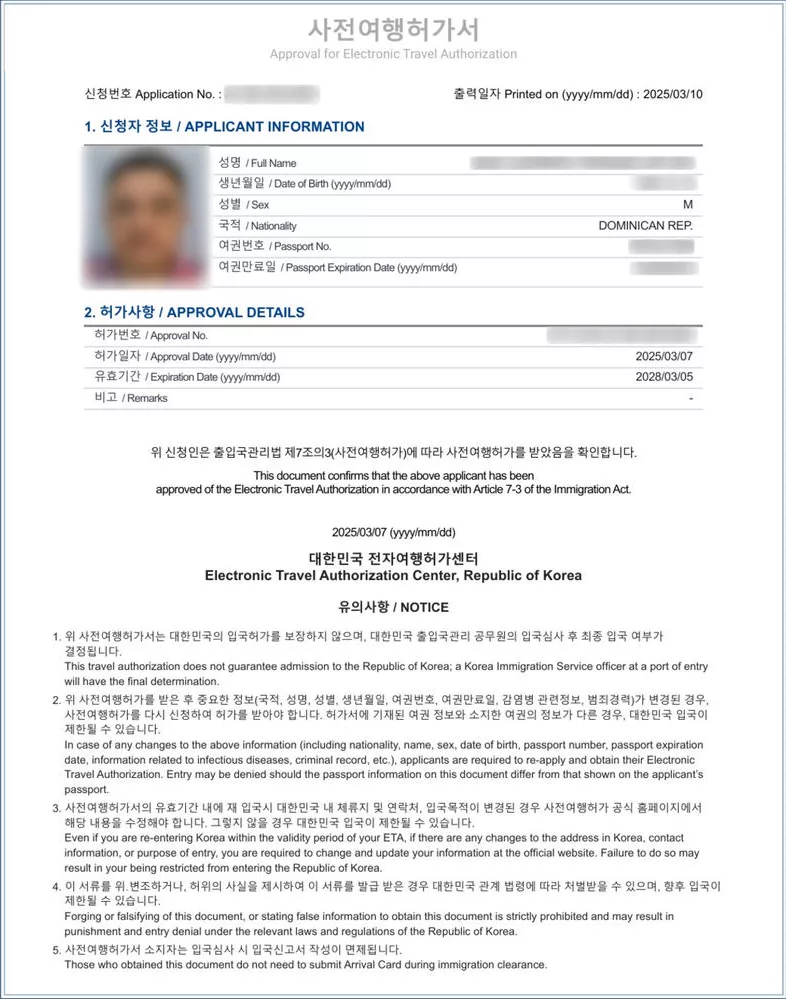
K-ETA validity refers to how long your approved travel authorization remains active. Currently, that is 3 years from the date of approval (or until your passport expires, whichever comes first). During this period, you can use the same K-ETA for multiple trips to South Korea.
Stay duration refers to how many consecutive days you are allowed to remain in South Korea on a single visit. This number varies by nationality and is determined by Korea’s visa waiver agreements with each country.
In short: your K-ETA lets you enter Korea multiple times over 3 years, but each individual visit has a country-specific time limit.
How Long Can You Stay in South Korea with K-ETA?
The length of your permitted stay depends on your passport nationality. South Korea has negotiated different visa-free stay periods with different countries. Below is a breakdown by stay duration category.
90-Day Stay Countries
The majority of K-ETA eligible nationalities can stay for up to 90 days per visit. This group includes 67 countries, among them:
| Country | Stay Duration |
|---|---|
| United States | 90 days |
| United Kingdom | 90 days |
| Canada | 90 days |
| Australia | 90 days |
| France | 90 days |
| Germany | 90 days |
| Japan | 90 days |
| Singapore | 90 days |
| Italy | 90 days |
| Spain | 90 days |
| Netherlands | 90 days |
| Sweden | 90 days |
| Taiwan | 90 days |
| Hong Kong | 90 days |
This is the most common stay duration and covers most Western and developed Asian nations.
60-Day Stay Countries
A smaller group of nationalities is limited to a 60-day stay per visit:
| Country | Stay Duration | Notes |
|---|---|---|
| Lesotho | 60 days | Standard 60-day rule |
| Russia | 90 days within 180 days | Maximum 90 days total in any 180-day window |
Russia has a special cumulative rule – while individual visits can be up to 90 days, the total days spent in Korea cannot exceed 90 within any rolling 180-day period.
30-Day Stay Countries
Twenty-seven countries have a 30-day stay limit per visit. These include:
| Country | Stay Duration |
|---|---|
| Albania | 30 days |
| Andorra | 30 days |
| Brunei | 30 days |
| Fiji | 30 days |
| Monaco | 30 days |
| Saudi Arabia | 30 days |
| South Africa | 30 days |
| Kuwait | 30 days |
| Oman | 30 days |
| Qatar | 30 days |
Travelers from these countries should plan shorter trips or arrange a visa if they need to stay longer than 30 days.
Special Rules by Nationality
Some nationalities have unique stay arrangements that don’t fit neatly into the standard categories:
- Kazakhstan – Maximum 30 days per entry, with a total not exceeding 60 days within any 180-day period. This is similar to Russia’s cumulative rule.
- United Kingdom (certain statuses) – UK citizens holding GBO, GBD, GBS, or GBP passport statuses are limited to a 30-day stay, rather than the standard 90 days.
- Belgium, Greece, Malaysia, Mexico, New Zealand, Switzerland – These countries fall into a 3-month stay category, which is effectively about 90 days but may be calculated on a calendar-month basis rather than a strict 90-day count.
If you are unsure about your specific stay duration, check the official K-ETA eligibility page which lists rules by nationality.
K-ETA Validity Period Explained
Multiple Entries
Once approved, your K-ETA allows unlimited entries into South Korea during its validity period. You do not need to reapply before each trip. This makes K-ETA particularly convenient for frequent travelers, business visitors, or anyone who makes regular trips to Korea.
The key points about K-ETA validity:
- Valid for 3 years from the date of approval
- Allows multiple entries – no need to reapply per trip
- Validity is tied to your passport number
- If your passport expires before the 3-year period, your K-ETA becomes invalid
Passport Expiry Rule
Your K-ETA validity is capped by your passport expiration date. If your passport expires in 18 months, your K-ETA will only be valid for those 18 months – not the full 3 years.
When you renew your passport, you must apply for a new K-ETA. The authorization is linked to your specific passport number, and a new passport means a new number.
This also applies if your passport is lost, stolen, or damaged and you receive a replacement. Each new passport requires a fresh K-ETA application.
Can You Extend Your Stay in South Korea?
No – you cannot extend a visa-free stay in South Korea. When you enter on K-ETA (which accompanies visa-free entry), the immigration officer stamps your passport with a fixed departure date. There is no mechanism to extend this period while remaining in the country.
If you need to stay longer than your permitted duration, you have two options:
- Leave South Korea before your stay expires and re-enter for a new stay period
- Apply for a proper visa at a Korean immigration office or embassy if you need a long-term stay for work, study, or residency
Attempting to stay beyond your permitted period without taking action will result in overstay penalties.
K-ETA Visa Run: Leaving and Re-entering Korea
A “visa run” means leaving South Korea before your stay expires and then re-entering to start a new stay period. This is a common practice for travelers who want to spend more than 90 days (or their nationality’s limit) in Korea.
Here’s what you need to know:
- You must leave before your stay expires. Even one day of overstay creates an immigration record.
- There is no minimum time you must spend outside Korea. You can technically fly to Japan or another nearby country and return the same day.
- Immigration officers have discretion. While the law allows re-entry, repeated visa runs in quick succession may raise questions. An immigration officer can deny entry if they suspect you are living in Korea without proper residency status.
- Your K-ETA remains valid for re-entry as long as it hasn’t expired and your passport is still valid.
Popular visa run destinations from Korea include Japan, Taiwan, and the Philippines, as flights are relatively short and affordable.
What Happens If You Overstay?
Overstaying your permitted stay in South Korea is taken seriously. Consequences can include:
- Fines – Financial penalties that increase with the length of overstay
- Deportation – Forced removal from South Korea at your own expense
- Entry ban – A ban on re-entering Korea for a specified period (typically 1-5 years, depending on severity)
- Future visa complications – An overstay record can affect visa applications to other countries as well
South Korea’s immigration system is digital and well-integrated. Overstays are detected automatically, and there is no grace period. If you realize you are close to your departure date and need more time, the safest option is to leave the country and re-enter with a fresh stay period.
K-ETA Exemption and Stay Duration in 2026
As of 2026, citizens of 22 countries are temporarily exempt from the K-ETA requirement. This exemption has been extended through December 31, 2026, and K-ETA will become mandatory again on January 1, 2027.
The exempt countries include: Australia, Austria, Belgium, Canada, Denmark, Finland, France, Germany, Hong Kong, Italy, Japan, Macao, Netherlands, New Zealand, Norway, Poland, Singapore, Spain, Sweden, Taiwan, United Kingdom, and United States.
Important notes about the exemption:
- Stay duration rules still apply. Even without K-ETA, the same nationality-based stay limits (90 days, 60 days, 30 days) are enforced.
- You must still complete an e-Arrival Card. K-ETA holders are exempt from the arrival card, but if you enter without K-ETA during the exemption period, you need to submit the e-Arrival Card online.
- From January 1, 2027, all eligible travelers must have a valid K-ETA before boarding their flight to Korea.
Even during the exemption period, applying for K-ETA is recommended. It streamlines immigration, exempts you from the arrival card, and ensures you are prepared when the requirement becomes mandatory again.
Frequently Asked Questions
How long can I stay in Korea with K-ETA?
The stay duration depends on your nationality. Most countries allow 90 days per visit, but some are limited to 60 days or 30 days. Check the official K-ETA website for your specific country’s rules.
Is K-ETA validity the same as stay duration?
No. K-ETA validity is 3 years (the period during which you can use it for multiple entries). Stay duration is the maximum number of consecutive days you can remain in Korea per visit, which varies by nationality.
Can I stay in Korea for 6 months with K-ETA?
No. The maximum stay per visit is 90 days for most nationalities. To stay longer, you would need to leave Korea and re-enter for a new stay period, or apply for a long-term visa.
Can I extend my K-ETA stay without leaving Korea?
No. Visa-free stays cannot be extended while in South Korea. You must leave the country before your stay expires and re-enter for a new period.
How many times can I enter Korea with one K-ETA?
There is no limit on the number of entries during your K-ETA’s validity period. You can enter and leave as many times as you want within the 3-year validity.
Do I need a new K-ETA for each trip?
No. A single K-ETA is valid for multiple entries over 3 years (or until your passport expires). You only need to reapply if your K-ETA has expired, your passport has been renewed, or your personal information has changed.
What if I overstay my K-ETA stay period?
Overstaying can result in fines, deportation, and an entry ban of 1 to 5 years. South Korea’s immigration system tracks overstays digitally, and there is no grace period.
Does K-ETA guarantee entry into South Korea?
No. K-ETA is a travel authorization, not a visa. The final decision to admit you into South Korea is made by an immigration officer at the port of entry.