

US citizens do not need a K-ETA to enter South Korea through December 31, 2026. American passport holders are temporarily exempt from the Korea Electronic Travel Authorization requirement for stays of up to 90 days for tourism or business. However, the K-ETA will become mandatory again starting January 1, 2027.
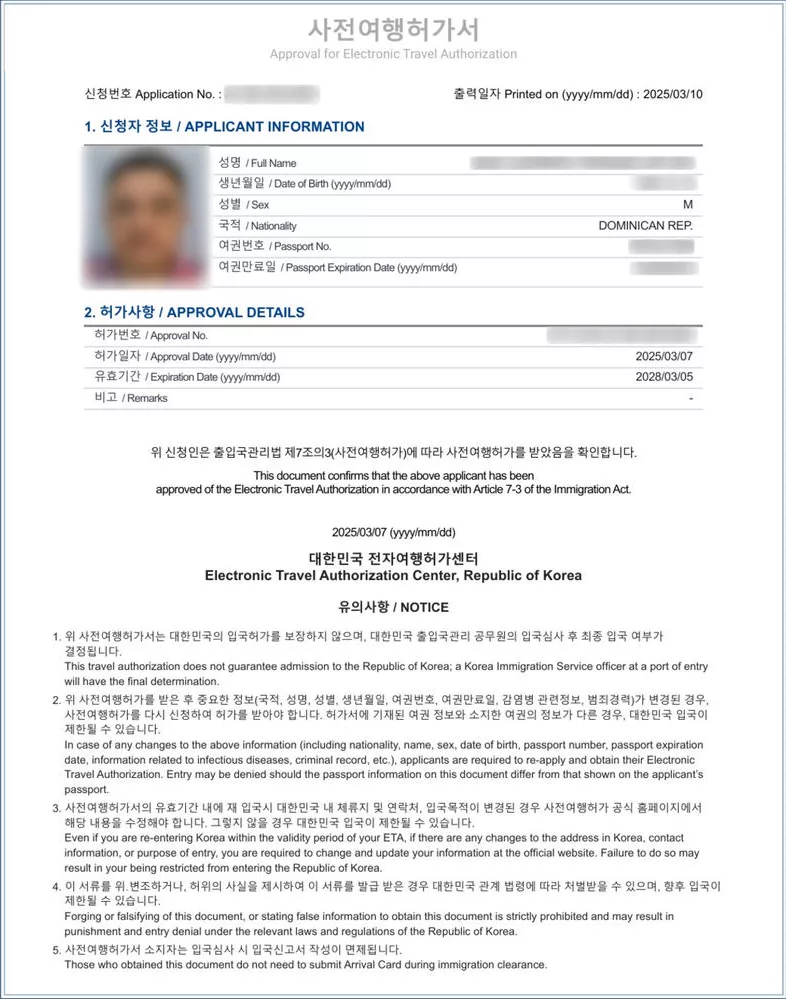
This guide covers everything US citizens need to know about K-ETA in 2026 – the current exemption status, whether to apply voluntarily, and how to prepare for when the requirement returns.
Do US Citizens Need K-ETA for South Korea in 2026?
No. As of January 2026, American citizens can enter South Korea without a K-ETA. This temporary exemption applies to tourism and business visits lasting up to 90 days.
The exemption has been extended multiple times since it was first introduced in April 2023 to boost tourism after the COVID-19 pandemic. The Korean Ministry of Justice extended the exemption through December 31, 2026, as announced by the Korean Consulate General in Atlanta.
| Requirement | Status for US Citizens (2026) |
|---|---|
| K-ETA | Exempt through December 31, 2026 |
| Valid passport | Required |
| e-Arrival Card | Required if no K-ETA |
| Visa | Not needed for stays up to 90 days |
| Visa | Required for work, study, or stays over 90 days |
For the most current updates on entry requirements, review the official K-ETA guide and the K-ETA exemption countries page.
K-ETA Exemption for Americans: Current Status
The K-ETA exemption for US citizens follows this timeline:
- April 1, 2023: South Korea exempts 22 countries from K-ETA to boost tourism – the US is included
- Extended through December 31, 2023: First extension
- Extended through December 31, 2024: Second extension (announced by Korean government)
- December 11, 2024: US Embassy Seoul confirms extension through December 31, 2025
- January 9, 2026: Ministry of Justice formally extends exemption through December 31, 2026
Korean Consulate General in Atlanta confirmed on December 29, 2025 that the exemption would be extended for one more year.
The exemption applies to all US passport holders, including those with passports issued in Guam. Australia, Canada, the UK, Japan, and most EU countries are also exempt.
What Happens After the Exemption Ends?
Starting January 1, 2027, K-ETA will be mandatory for US passport holders. Every American traveler will need an approved K-ETA before boarding their flight or ship to South Korea.
Key details about the future requirement:
- Apply at least 72 hours before departure – processing can take up to 72 hours
- Fee: KRW 10,000 (~$7-8 USD)
- Validity: 3 years from the date of approval, multiple entries
- Covered purposes: Tourism, visiting family, attending events, short-term business
If you plan to visit South Korea after January 1, 2027, start your K-ETA application using this step-by-step application guide. For information on fees, see K-ETA application fee.
Should US Citizens Still Apply for K-ETA?
Even though Americans are exempt in 2026, there are good reasons to apply voluntarily.
Benefits of applying for K-ETA even while exempt:
- Skip the e-Arrival Card – K-ETA holders do not need to fill out the digital arrival card
- Faster immigration – Approved K-ETA travelers can move through entry more quickly
- Ready for 2027 – If your K-ETA is approved before the exemption ends, it remains valid for 3 years
- Multiple entries – One approval covers unlimited entries over 3 years
When you do NOT need to apply:
- You plan to visit only in 2026 and fill out the e-Arrival Card instead
- You do not mind the arrival card process at immigration
The Korean Consulate General notes that those who wish to receive benefits from K-ETA approval may apply voluntarily, but the application fee will be charged.
How US Citizens Can Apply for K-ETA
If you decide to apply for K-ETA, the process is straightforward and takes about 10 minutes.
Step-by-step:
- Visit the official K-ETA website at k-eta.go.kr or download the K-ETA mobile app
- Select your nationality (United States)
- Fill in your personal details and passport information
- Upload a recent passport photo (clear, no glare)
- Provide accommodation details in South Korea
- Pay the application fee: KRW 10,000 (~$7-8 USD)
- Submit and wait for processing (usually within 30 minutes, up to 72 hours)
Requirements for US citizens:
- Valid US passport with at least 6 months validity from arrival date
- At least one blank passport page
- Recent passport-style photo
- Valid email address for receiving approval notifications
For detailed steps, see the complete K-ETA application guide. For processing time specifics, check K-ETA processing time.
K-ETA vs. e-Arrival Card for Americans
US citizens entering South Korea without a K-ETA must fill out the e-Arrival Card. Since January 1, 2026, paper arrival cards are no longer accepted – all travelers must use the digital version.
| Feature | K-ETA | e-Arrival Card |
|---|---|---|
| Required for US citizens in 2026 | No (exempt) | Yes (if no K-ETA) |
| Fee | KRW 10,000 (~$7-8 USD) | Free |
| Validity | 3 years, multiple entries | Single use |
| Processing time | Up to 72 hours | Submitted within 72 hours of landing |
| Paper form option | No | No (digital only since Jan 1, 2026) |
| Skip at immigration | Faster entry | Standard processing |
| Required after Jan 1, 2027 | Yes (mandatory) | No (K-ETA replaces it) |
The e-Arrival Card must be submitted within 72 hours of arriving in South Korea. You cannot use the paper arrival card anymore – it is all digital now.
If you have an approved K-ETA, you do not need to fill out the e-Arrival Card. This is one of the main advantages of applying for K-ETA even while exempt.
Entry Requirements for US Citizens Visiting South Korea
Beyond the K-ETA exemption, here is what US citizens need to enter South Korea in 2026:
Documents required:
- Valid US passport – must be valid for at least 6 months beyond your arrival date
- Arrival card or K-ETA – either an e-Arrival Card (free, digital) or an approved K-ETA
- Return/onward flight ticket – proof of planned departure within 90 days
- Accommodation details – hotel reservations or host information
Visa-free rules for Americans (2026):
- Up to 90 days stay for tourism or business
- No visa required for short-term visits
- Cannot work, teach English, or study without a proper visa
- Cannot extend the 90-day stay while in South Korea – must exit and re-enter
When a visa is required:
- Employment or teaching English in South Korea
- Study programs (university enrollment)
- Stays exceeding 90 days
- Any purpose beyond tourism or short-term business
For non-tourism purposes, contact the nearest South Korean embassy or consulate for visa application details. US citizens can also visit the South Korea travel advisory page from the US Department of State.
K-ETA for US Citizens: Frequently Asked Questions
Do Americans need K-ETA for South Korea in 2026?
No. US citizens are temporarily exempt from K-ETA requirements through December 31, 2026. American passport holders can enter South Korea for tourism or business without a K-ETA, but they must submit a digital e-Arrival Card.
When will US citizens need K-ETA again?
Starting January 1, 2027, K-ETA will be mandatory for US passport holders entering South Korea. You should apply at least 72 hours before departure through the official website at k-eta.go.kr.
Do I need a visa for Korea if I’m a US citizen?
No visa is needed for stays of up to 90 days for tourism or business. You need a visa if you plan to work, study, or stay longer than 90 days.
Can I apply for K-ETA voluntarily as a US citizen?
Yes. Even though you are exempt, you can still apply for K-ETA at k-eta.go.kr. Voluntary K-ETA holders skip the e-Arrival Card and get faster immigration processing. The fee is 10,000 KRW (~$7-8 USD).
What is the K-ETA application fee for US citizens?
The K-ETA costs 10,000 KRW (approximately $7-8 USD). The fee is non-refundable, even if the application is denied or you turn out to be exempt.
Do US children need K-ETA?
Yes, every traveler including infants and minors must have their own K-ETA when the requirement is active. Parents can manage their children’s applications through their own account.
How long can I stay in South Korea as a US citizen?
US citizens can stay up to 90 days per visit for tourism or business without a visa. The K-ETA (when required) is valid for 3 years with multiple entries, but each stay is limited to 90 days.
Is the K-ETA the same as an e-visa?
No. K-ETA is a travel authorization, not a visa. It is simpler and faster to obtain than a traditional visa and is electronically linked to your passport. For short visits, K-ETA is the required document; for work or study, you need a separate visa.