

Planning a trip to South Korea? Before you book your flight, you need to know exactly what documents and authorizations are required at the border. This guide covers every entry requirement for South Korea in 2026, from passport rules to K-ETA, the e-Arrival Card, visa-free entry, biometric registration, and health screening.
What Documents Do You Need to Enter South Korea?
To enter South Korea as a tourist in 2026, you will generally need the following:
- Valid passport – must be valid beyond your departure date
- e-Arrival Card – submitted online before arrival (mandatory for all foreign nationals)
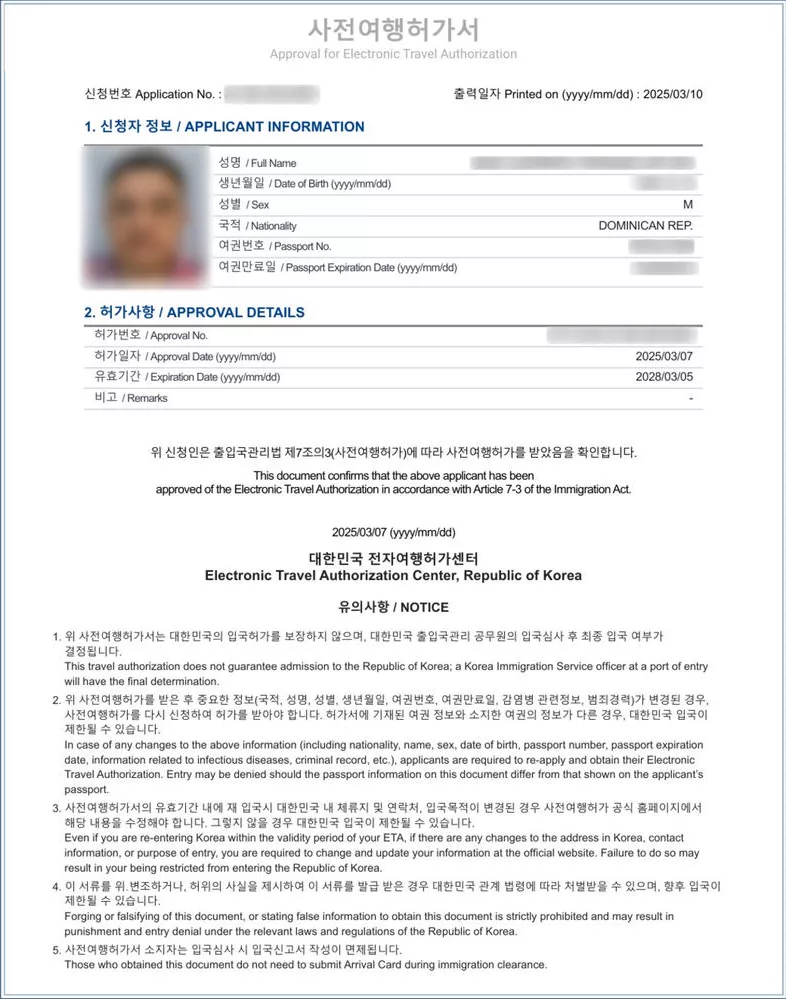
- K-ETA – currently waived for 22 countries through December 31, 2026 (voluntary)
- Return or onward ticket – required for visa-free entry
- Biometric registration – fingerprints and facial scan taken at the airport
Depending on your nationality and purpose of travel, you may also need a visa. Citizens of approximately 110 countries can enter visa-free for tourism and short-term business stays of up to 90 days.
For the full details on each of these requirements, read on below.
Passport Requirements for South Korea
Your passport is the single most important document for entering South Korea. Here are the key rules:
- Short-term stays (up to 90 days): Your passport must be valid at the time of entry. There is no strict minimum remaining validity requirement, though airlines may enforce their own rules. A validity of at least 6 months beyond your travel dates is strongly recommended to avoid any issues.
- Long-term stays (work, study, residency): Your passport should have at least 6 months of remaining validity from your date of arrival.
- Blank pages: You need at least one blank page for entry stamps.
- Lost or stolen passports: Entry will be denied if you attempt to use a passport that has been reported lost or stolen.
Always check with your airline before departure, as carriers may impose stricter passport validity rules than Korean immigration authorities.
K-ETA (Korea Electronic Travel Authorization)
The K-ETA is South Korea’s electronic travel authorization system. It was introduced to pre-screen travelers from visa-exempt countries before they arrive.
Is K-ETA Required in 2026?
No, not right now. The K-ETA requirement has been temporarily waived for citizens of 22 eligible countries and regions through December 31, 2026. This exemption was extended as part of the government’s “Visit Korea Year” initiative to boost tourism.
However, the K-ETA requirement will become mandatory again on January 1, 2027. If you are planning travel for early 2027, you should apply for K-ETA in advance.
Even during the exemption period, travelers can still apply for K-ETA voluntarily. Having an approved K-ETA can speed up your immigration process at the airport.
Which Countries Need K-ETA?
When the requirement is in effect (starting January 1, 2027), citizens of approximately 110 visa-exempt countries and regions need K-ETA approval before entering South Korea. This includes travelers from the United States, United Kingdom, Canada, Australia, most EU countries, Japan, and many others.
Countries that are not visa-exempt and require a traditional visa are not eligible for K-ETA. They must apply for a visa through a Korean embassy or consulate.
The K-ETA costs 10,000 KRW (approximately $7-8 USD) and is valid for 2 years from the date of issue, allowing multiple entries for stays of up to 90 days each.
For a full breakdown, see our guide on K-ETA Required Countries.
e-Arrival Card (Digital Entry Declaration)
The e-Arrival Card is a mandatory digital entry declaration form for all foreign nationals entering South Korea. It replaced the traditional paper arrival card.
Key details:
- When to submit: Online, within 72 hours (3 days) before your arrival in Korea
- Cost: Free (no fee)
- Where to apply: Official e-Arrival Card website
- Paper alternative: Paper entry declaration forms are still available at the airport if you cannot submit online
You will need your passport details, flight information, and accommodation address in South Korea to complete the e-Arrival Card.
Scam warning: Some unofficial websites charge fees for the e-Arrival Card. The official service is always free of charge. Only use the official government website.
For a step-by-step walkthrough, see our South Korea e-Arrival Card guide.
Visa-Free Entry to South Korea
Citizens of approximately 110 countries and regions can enter South Korea without a visa for short-term stays. This applies to tourism, short-term business visits, transit, and visiting family.
Visa-Free Stay Duration
| Nationality | Visa-Free Stay | Notes |
|---|---|---|
| United States | Up to 90 days | Tourism and short-term business |
| United Kingdom | Up to 90 days | Must have onward/return ticket |
| Canada | Up to 90 days | Cannot change visa status in-country |
| Australia | Up to 90 days | K-ETA exemption through Dec 2026 |
| Most EU countries | Up to 90 days | 90 days within 180-day period |
| Japan | Up to 90 days | Bilateral agreement |
Visa-free entry comes with conditions:
- You cannot work in South Korea, whether paid or unpaid
- You must hold a return or onward ticket
- You cannot change your visa status once inside the country
- The 90-day stay cannot be extended without applying through Korea Immigration Service
If you overstay your visa-free period, you may face fines, detention, deportation, and a ban on re-entry. If you need more time, contact the Korea Immigration Service before your authorized stay expires.
For more details, see our Korea Visa Exemption guide.
When Do You Need a South Korea Visa?
You need a visa if:
- Your country is not on the visa-exempt list
- You plan to stay longer than 90 days
- You intend to work, study, or invest in South Korea
- You are teaching English (requires an E-2 visa and a 3-year university degree)
- You are joining family members who are Korean residents
Common visa types include:
| Visa Type | Purpose | Where to Apply |
|---|---|---|
| C-3 (Short-term) | Tourism, transit, visiting family | Embassy/consulate |
| D-2 (Student) | University studies | Embassy/consulate before arrival |
| E-2 (English Teacher) | Teaching English | Embassy/consulate before arrival |
| E-7 (Professional) | Skilled employment | Embassy/consulate before arrival |
| F-series (Resident) | Long-term residency, marriage | Embassy/consulate |
Visa applications must be submitted at a South Korean embassy or consulate before you travel. You cannot obtain a visa on arrival, and you cannot change your visa status once you are inside South Korea.
Biometric Registration at the Airport
All foreign nationals entering South Korea must register their biometrics at the port of entry. This includes:
- Fingerprints (all 10 fingers)
- Facial photograph
This takes place at the immigration counter when you arrive. The process is quick and routine.
Exemptions:
– Children under 17 years old
– Diplomatic passport holders
Refusal to provide biometrics may result in denial of entry.
Health Screening & Q-Code
South Korea has health screening measures in place at ports of entry:
- Body temperature checks are conducted on all arriving passengers
- Travelers arriving from countries designated as “Quarantine Inspection Required Areas” who show symptoms of illness must submit a health questionnaire
- The questionnaire can be completed through the Q-Code system (electronic) or on paper upon arrival
- Q-Code can be registered up to 7 days before arrival at qcode.kdca.go.kr
Failure to complete required health screenings can result in fines of up to KRW 10 million (approximately $7,500 USD).
Vaccination Requirements
There are no mandatory vaccinations for entry into South Korea. However, the following are generally recommended:
- Hepatitis A and B
- Typhoid
- Japanese encephalitis (for rural/long-term stays)
- Routine vaccinations (MMR, tetanus, etc.)
Yellow fever vaccination is not required as there is no risk of yellow fever in South Korea.
Customs Declaration
You must declare any items that may be prohibited or subject to tax or duty when entering South Korea. This includes:
- Cash exceeding $10,000 USD (or equivalent)
- Certain food products, plants, and animals
- Medications (carry a doctor’s prescription and keep medicines in original packaging)
- Counterfeit or pirated goods (prohibited)
South Korea has strict rules on importing firearms, narcotics, and certain publications. For full details, visit the Korea Customs Service.
Entry Requirements by Nationality
| Requirement | US | UK | Canada | Australia | India | China |
|---|---|---|---|---|---|---|
| Valid passport | Yes | Yes | Yes | Yes | Yes | Yes |
| Visa-free entry | 90 days | 90 days | 90 days | 90 days | K-ETA or visa | Visa required |
| K-ETA (2026) | Exempt | Exempt | Exempt | Exempt | Required | N/A |
| e-Arrival Card | Required | Required | Required | Required | Required | Required |
| Biometrics | Yes | Yes | Yes | Yes | Yes | Yes |
Note: K-ETA exemption is temporary and expires December 31, 2026. Starting January 1, 2027, K-ETA will be mandatory for all visa-exempt nationalities.
Frequently Asked Questions
Do I need K-ETA to enter South Korea in 2026?
No. The K-ETA requirement is temporarily waived for citizens of 22 eligible countries through December 31, 2026. However, K-ETA becomes mandatory again on January 1, 2027.
What documents do US citizens need to enter South Korea?
US citizens need a valid passport, an e-Arrival Card (submitted online before arrival), and a return or onward ticket. K-ETA is not currently required due to the temporary exemption. No visa is needed for stays of up to 90 days.
Is the e-Arrival Card mandatory for South Korea?
Yes. All foreign nationals must submit an e-Arrival Card online within 72 hours before arrival, or complete a paper form at the airport. The e-Arrival Card is free of charge.
Can I enter South Korea without a visa?
Citizens of approximately 110 countries can enter South Korea without a visa for tourism and short business stays of up to 90 days. Citizens of non-exempt countries must apply for a visa at a Korean embassy or consulate.
How long can I stay in South Korea without a visa?
Most visa-exempt travelers can stay up to 90 days. This applies to citizens of the US, UK, Canada, Australia, Japan, and most EU countries. The stay cannot be extended without applying through Korea Immigration Service.
Do I need a return ticket to enter South Korea?
Yes. Visa-free travelers must have a confirmed return or onward ticket. Immigration officers may ask to see proof of your departure plans.
What happens if I overstay in South Korea?
Overstaying can result in fines, detention, deportation, and a ban on future entry. If you need more time, contact the Korea Immigration Service before your authorized stay expires.