

South Korea allows citizens from over 100 countries to enter without a visa for short stays. Whether you qualify for visa-free entry depends on your nationality, and even if you do not need a visa, you may still need a Korea Electronic Travel Authorization (K-ETA) before you board your flight. This guide covers every visa-exempt country, stay durations, K-ETA requirements, and special entry programs available in 2026.
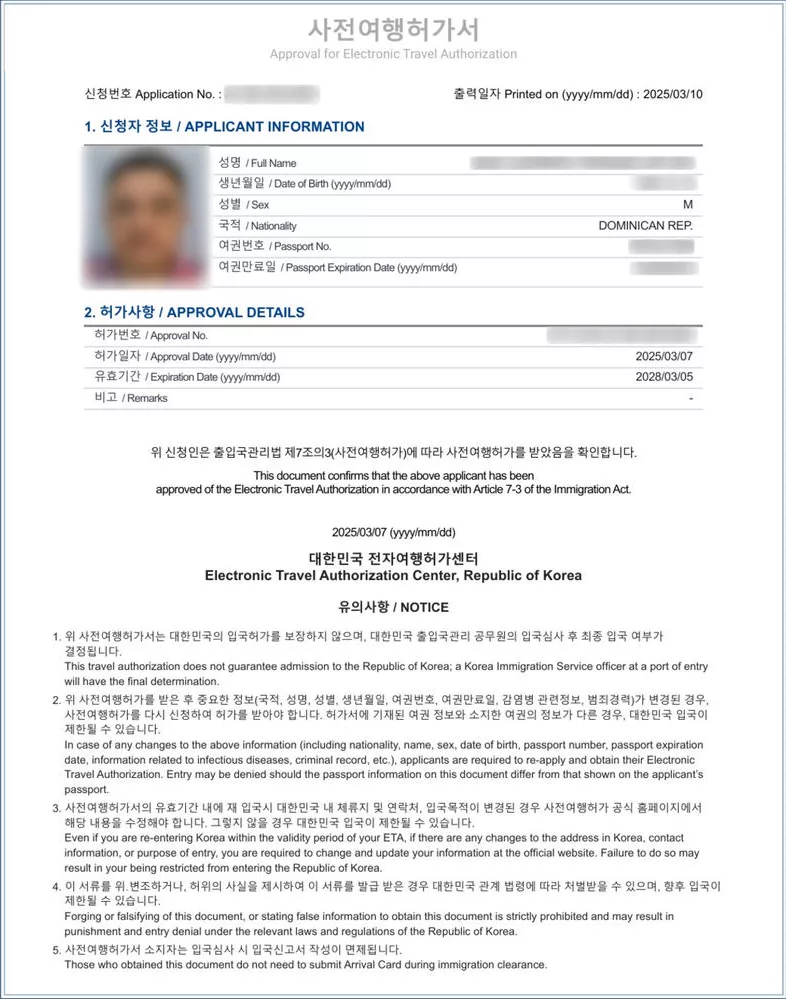
What Is Korea Visa Exemption?
Korea visa exemption means that citizens of certain countries can enter South Korea for tourism, business, or transit purposes without obtaining a visa in advance. Instead of going through a full visa application at a Korean embassy or consulate, eligible travelers are granted entry status upon arrival.
There are two types of entry status for visa-exempt visitors:
- B-1 (Visa Exemption) – granted to citizens of countries with bilateral visa-waiver agreements with South Korea
- B-2 (Tourist in Transit) – granted to citizens of countries designated under South Korea’s tourist-in-transit visa exemption policy
Both statuses allow short-term stays, but the allowed duration varies by nationality. Some visitors can stay for up to six months, while others are limited to 30 days.
It is important to understand that visa exemption is not the same as K-ETA exemption. Most visa-exempt travelers still need to obtain a K-ETA before entering South Korea, unless they fall under one of the K-ETA exemption categories.
Complete List of Visa-Free Countries for South Korea
As of 2026, citizens from approximately 111 countries and territories can enter South Korea without a visa. The stay duration ranges from 30 days to six months depending on nationality and bilateral agreements.
Asia and Middle East
| Country | Stay Duration |
|---|---|
| Bahrain | 30 days |
| Brunei | 30 days |
| Hong Kong | 90 days |
| Israel | 90 days |
| Japan | 90 days |
| Kazakhstan | 30 days |
| Kuwait | 90 days |
| Macao | 90 days |
| Malaysia | 90 days |
| Oman | 30 days |
| Qatar | 90 days |
| Saudi Arabia | 30 days |
| Singapore | 90 days |
| Taiwan | 90 days |
| Thailand | 90 days |
| Turkey | 90 days |
| United Arab Emirates | 90 days |
Europe
| Country | Stay Duration |
|---|---|
| Albania | 30 days |
| Andorra | 30 days |
| Austria | 90 days |
| Belgium | 90 days |
| Bosnia and Herzegovina | 30 days |
| Bulgaria | 90 days |
| Croatia | 90 days |
| Cyprus | 30 days |
| Czech Republic | 90 days |
| Denmark | 90 days |
| Estonia | 90 days |
| Finland | 90 days |
| France | 90 days |
| Germany | 90 days |
| Greece | 90 days |
| Holy See (Vatican) | 30 days |
| Hungary | 90 days |
| Iceland | 90 days |
| Ireland | 90 days |
| Italy | 90 days |
| Latvia | 90 days |
| Liechtenstein | 90 days |
| Lithuania | 90 days |
| Luxembourg | 90 days |
| Malta | 90 days |
| Monaco | 30 days |
| Montenegro | 30 days |
| Netherlands | 90 days |
| Norway | 90 days |
| Poland | 90 days |
| Portugal | 90 days |
| Romania | 90 days |
| Russia | 60 days |
| San Marino | 30 days |
| Serbia | 90 days |
| Slovakia | 90 days |
| Slovenia | 90 days |
| Spain | 90 days |
| Sweden | 90 days |
| Switzerland | 90 days |
| United Kingdom | 90 days |
Americas
| Country | Stay Duration |
|---|---|
| Antigua and Barbuda | 90 days |
| Argentina | 90 days |
| Bahamas | 90 days |
| Barbados | 90 days |
| Brazil | 90 days |
| Canada | 6 months |
| Chile | 90 days |
| Colombia | 90 days |
| Costa Rica | 90 days |
| Dominica | 90 days |
| Dominican Republic | 90 days |
| Ecuador | 90 days |
| El Salvador | 90 days |
| Grenada | 90 days |
| Guatemala | 90 days |
| Guyana | 30 days |
| Haiti | 90 days |
| Honduras | 30 days |
| Jamaica | 90 days |
| Mexico | 90 days |
| Nicaragua | 90 days |
| Panama | 90 days |
| Paraguay | 30 days |
| Peru | 90 days |
| Saint Kitts and Nevis | 90 days |
| Saint Lucia | 90 days |
| Saint Vincent and the Grenadines | 90 days |
| Suriname | 90 days |
| Trinidad and Tobago | 90 days |
| United States | 90 days |
| Uruguay | 90 days |
| Venezuela | 90 days |
Oceania
| Country | Stay Duration |
|---|---|
| Australia | 90 days |
| Fiji | 30 days |
| Kiribati | 30 days |
| Marshall Islands | 30 days |
| Micronesia | 30 days |
| Nauru | 30 days |
| New Caledonia | 30 days |
| New Zealand | 90 days |
| Palau | 30 days |
| Samoa | 30 days |
| Solomon Islands | 30 days |
| Tonga | 30 days |
| Tuvalu | 30 days |
Africa
| Country | Stay Duration |
|---|---|
| Botswana | 90 days |
| Eswatini | 30 days |
| Lesotho | 60 days |
| Mauritius | 30 days |
| Morocco | 90 days |
| Seychelles | 30 days |
| South Africa | 30 days |
| Tunisia | 30 days |
K-ETA Exemption: 22 Countries That Don’t Need K-ETA (2026)
Even if your country is on the visa-free list, you normally need a K-ETA to enter South Korea. However, the South Korean government has temporarily exempted citizens of 22 countries and territories from the K-ETA requirement. This exemption has been extended through December 31, 2026.
The 22 K-ETA-exempt countries and regions are:
Asia: Hong Kong, Japan, Macao, Singapore, Taiwan
Americas: Canada, United States
Europe: Austria, Belgium, Denmark, Finland, France, Germany, Italy, Netherlands, Norway, Poland, Spain, Sweden, United Kingdom
Oceania: Australia, New Zealand
If you hold a passport from one of these 22 countries, you can enter South Korea without a visa AND without a K-ETA until the end of 2026. Starting January 1, 2027, K-ETA is expected to become mandatory again for all visa-exempt travelers.
Age-Based K-ETA Exemption
Regardless of your nationality, you are exempt from K-ETA if you are:
- 17 years old or younger, or
- 65 years old or older
This age-based exemption applies to citizens of all visa-exempt countries and has been in effect since July 2023. If you fall within the eligible age range (18-64) and your country is not on the 22-country exemption list, you must obtain a K-ETA before traveling to South Korea.
K-ETA Requirements for Visa-Exempt Travelers
If you need a K-ETA, here is what you need to know:
- Fee: KRW 10,000 (approximately $7 USD), non-refundable
- Processing time: Up to 72 hours after submission
- Validity: 3 years from the date of approval (or until your passport expires, whichever comes first)
- Multiple entry: A valid K-ETA can be used for multiple trips to South Korea
- Application: Submit online at the official K-ETA website or via the K-ETA mobile app
With a valid K-ETA, you also skip the need to fill out a separate arrival card when entering South Korea. For a full walkthrough of the application process, see our K-ETA application guide.
If your K-ETA application is rejected, you can still apply for a regular visa at a Korean embassy or consulate. Learn more about the differences in our K-ETA vs visa comparison.
Special Visa-Free Policies
Beyond the standard bilateral visa-waiver agreements, South Korea has several special programs that allow visa-free entry under specific conditions.
Jeju Visa Waiver Program
Citizens of most countries can visit Jeju Province without a visa for up to 30 days. This program is designed to boost tourism to Jeju Island.
Key requirements:
- You must enter via direct international flights landing at Jeju International Airport
- You need a valid K-ETA approval before your flight
- The stay is limited to Jeju Province only (you cannot travel to mainland South Korea under this program)
Citizens of a small number of countries are excluded from this program. However, even excluded nationalities may qualify if they hold a Certificate of Invitation from the Jeju Government or have previously visited South Korea multiple times.
Transit Visa Exemption (30 Days)
If you are not from a visa-exempt country but hold a valid visa or residence permit from the United States, Canada, Australia, New Zealand, or any of 32 European countries, you may enter South Korea without a visa for up to 30 days while in transit.
To qualify, you must meet one of these routing conditions:
- Arriving directly from one of the qualifying countries and traveling to a third country
- Arriving from a qualifying country after transiting through a fourth country for less than 72 hours
- Departing to a qualifying country after arriving from a third country
This policy does not apply to citizens of certain restricted nationalities. Check the full entry requirements for the latest restrictions.
China Tour Group Visa-Free Entry
Citizens of mainland China can visit South Korea without a visa for up to 15 days as part of an organized tour group. The group must:
- Have at least 3 travelers
- Be accompanied by a representative of a tour operator registered in both China and South Korea
- Enter through designated airports (Incheon, Gimhae, Cheongju, Muan, or Yangyang)
An additional 5 days may be granted for transit to Jeju Island. Student groups from Chinese primary or high schools may stay for 30 days with authorized staff supervision.
Group Tours via Regional Airports
Tourist groups from Indonesia, Mongolia, Philippines, and Vietnam can enter South Korea visa-free for up to 15 days through designated regional airports:
- Yangyang International Airport – access to Gangwon Province and Seoul Metropolitan Area
- Muan International Airport – access to South Jeolla, North Jeolla, and Jeju provinces (except Mongolia)
These programs are renewed annually and typically run from April/May through March/May of the following year.
Frequently Asked Questions
Which countries are visa exempt for South Korea?
Over 100 countries are visa exempt for South Korea, including the United States, Canada, Japan, Australia, New Zealand, and most European Union member states. The full list includes approximately 111 countries and territories as of 2026, with stay durations ranging from 30 days to 6 months depending on nationality.
Can US citizens enter South Korea without a visa?
Yes, US citizens can enter South Korea without a visa for stays of up to 90 days. Additionally, US passport holders are exempt from K-ETA requirements through December 31, 2026. Starting January 1, 2027, US citizens will likely need to obtain a K-ETA before traveling to South Korea.
Do I need a K-ETA if my country is visa-exempt?
Yes, most visa-exempt travelers need a K-ETA. However, citizens of 22 countries (including the US, Canada, UK, Japan, Australia, and most EU nations) are exempt from K-ETA through December 31, 2026. Travelers aged 17 or younger and 65 or older are also exempt regardless of nationality.
How long can I stay in South Korea without a visa?
The allowed stay depends on your nationality. Canadian citizens can stay up to 6 months. Citizens of most EU countries, the US, Australia, and many other nations can stay up to 90 days. Some nationalities are limited to 60 days (Russia, Lesotho) or 30 days (several Asian, European, and Pacific Island nations).
Is South Korea visa-free for Indian citizens?
No, Indian citizens are not on the visa-free list and need a visa to enter South Korea. However, Indian citizens with diplomatic or government official passports can enter visa-free for up to 90 days. Regular passport holders must apply for a visa at a Korean embassy or consulate.
What is the Jeju Visa Waiver Program?
The Jeju Visa Waiver Program allows citizens of most countries to stay on Jeju Island for up to 30 days without a visa. You must arrive via direct international flights to Jeju International Airport and have K-ETA approval. The stay is limited to Jeju Province only.
Can I enter South Korea without a visa if I have a US visa?
Yes, if you hold a valid visa or residence permit from the US, Canada, Australia, New Zealand, or a European country, you may enter South Korea visa-free for up to 30 days while in transit. You must meet specific routing requirements, such as arriving from or departing to the qualifying country.
What happens when the K-ETA exemption expires in 2026?
The current K-ETA exemption for 22 countries is valid through December 31, 2026. Starting January 1, 2027, citizens of all visa-exempt countries (except those under 18 or over 65) will need to obtain a K-ETA before entering South Korea. The K-ETA costs approximately $7 USD and is valid for 3 years.