

If you’re planning a trip to South Korea, you’ve probably come across the term “K-ETA” while researching entry requirements. So what exactly is it, and do you need one? This guide breaks it all down.
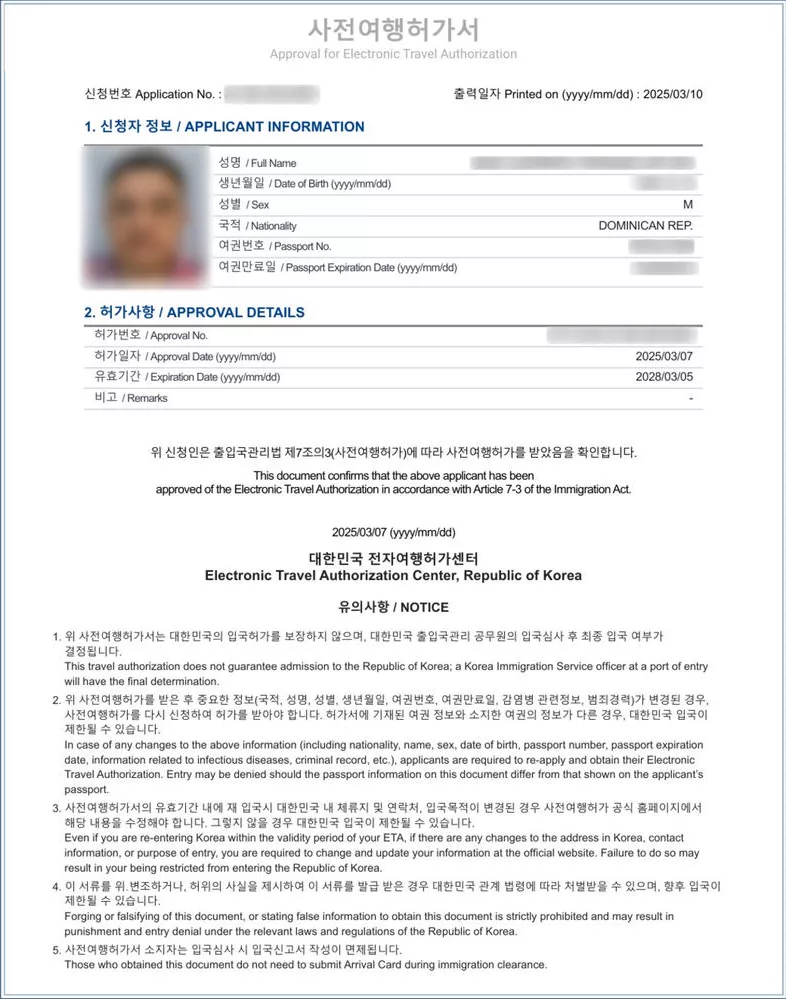
K-ETA stands for Korea Electronic Travel Authorization. It’s a digital travel permit that the South Korean government requires from foreign nationals who want to enter the country without a visa. Think of it as a pre-screening process – you submit your information online before your trip, and Korean immigration authorities review it before you even board your flight.
The system was first introduced in September 2021 as part of South Korea’s effort to modernize its border management and improve security. Rather than filling out paper arrival cards at the airport, travelers can submit their details electronically in advance.
Important note: As of 2026, many nationalities – including US, UK, and most European citizens – are temporarily exempt from the K-ETA requirement. This exemption runs through December 31, 2026. K-ETA will become mandatory again on January 1, 2027. You can still apply voluntarily, which comes with benefits like skipping the arrival card.
How Does K-ETA Work?
The K-ETA process is straightforward. Here’s how it works step by step:
- Apply online – Visit the official K-ETA website (k-eta.go.kr) or use the K-ETA mobile app. The application is available in over 12 languages.
- Fill in your details – You’ll provide personal information, passport details, travel plans, and answer questions about your health and criminal history.
- Pay the fee – The K-ETA costs 10,000 KRW (roughly $7-8 USD). An additional online payment processing fee applies. The fee is non-refundable, even if your application is denied.
- Wait for approval – Processing typically takes 72 hours or less, though it can take longer during peak travel seasons when application volumes spike.
- Receive your authorization – If approved, your K-ETA is electronically linked to your passport. You don’t need to print anything.
Once approved, your K-ETA is valid for three years (or until your passport expires, whichever comes first). During that period, you can use it for multiple entries into South Korea.
Who Needs K-ETA?
K-ETA is required for nationals of countries that have a visa-exemption agreement with South Korea. If you can enter South Korea without a visa, you need K-ETA (when the requirement is active).
Over 100 countries are eligible for K-ETA, including:
- North America: United States, Canada, Mexico
- Europe: United Kingdom, Germany, France, Italy, Spain, Netherlands, and most EU nations
- Asia-Pacific: Australia, New Zealand, Japan, Singapore, Malaysia, Thailand, Hong Kong SAR, Macao SAR
- Americas: Brazil, Argentina, Chile, Colombia, Costa Rica
- Middle East/Africa: Israel, Kuwait, Bahrain, Morocco
The allowed stay period varies by nationality – most countries get 90 days, while some get 30 days, 60 days, or even 6 months (Canada).
If your country is not on the visa-exemption list, you’ll need to apply for a traditional visa through a South Korean embassy or consulate instead.
Key Facts About K-ETA
Here’s a quick-reference table with the essential K-ETA details:
| Detail | Information |
|---|---|
| Full name | Korea Electronic Travel Authorization |
| Issuing authority | Korea Immigration Service (Ministry of Justice) |
| Official website | k-eta.go.kr |
| Fee | 10,000 KRW (~$7-8 USD) + online payment fee |
| Processing time | Typically 72 hours or less |
| Validity | 3 years (or until passport expires) |
| Entry type | Multiple entries within validity period |
| Application method | Online (website or mobile app) |
| Languages available | 12+ including English, Chinese, Japanese, Spanish, French |
| Eligible countries | 100+ nationalities |
K-ETA vs a Visa: What’s the Difference?
This is one of the most common points of confusion. K-ETA is not a visa. Here’s how they differ:
| Aspect | K-ETA | South Korea Visa |
|---|---|---|
| Purpose | Pre-screening for visa-free travelers | Authorization to enter for specific purposes |
| Who needs it | Visa-exempt nationalities | Non-exempt nationalities or specific visa categories |
| Application process | Online, simple form | Embassy/consulate, extensive documents |
| Processing time | Up to 72 hours | Days to weeks |
| Cost | ~$7-8 USD | Varies ($40-$200+) |
| Validity | 3 years, multiple entry | Varies by visa type |
| Stay period | 30-180 days depending on nationality | Depends on visa category |
| Guarantee of entry | No | No |
The official K-ETA website states it clearly: “K-ETA is NOT a visa and only fulfills some of the requirements for entering the Republic of Korea without a visa.” Even with an approved K-ETA, the final decision on whether you can enter South Korea rests with the immigration officer at the port of entry.
Is K-ETA Required Right Now?
This changes frequently, so it’s critical to check the latest status before your trip.
As of 2026, South Korea has extended a temporary exemption from the K-ETA requirement for many nationalities. This means citizens of exempt countries can enter South Korea without applying for K-ETA. The exemption is currently valid through December 31, 2026.
Starting January 1, 2027, K-ETA will become mandatory again for all eligible nationalities.
Why the exemption? South Korea introduced the pause to boost tourism following the pandemic years and to simplify entry procedures during a period of travel recovery. The government has extended the exemption multiple times since it was first introduced.
Should you still apply even if exempt? There are benefits to voluntarily obtaining K-ETA even during the exemption period:
- You won’t need to fill out the arrival card at the airport
- Faster immigration processing
- Pre-approval gives you peace of mind
- You’ll be ready when the requirement becomes mandatory again
Check the latest K-ETA exemption status on our K-ETA Exemption Countries page.
How to Get K-ETA
If you need or want to apply for K-ETA, the process takes just a few minutes:
- Go to the official site – Visit k-eta.go.kr or download the K-ETA app from Google Play or the App Store.
- Create an account – Register with your email address.
- Complete the application – Enter your passport details, travel information, and answer screening questions.
- Upload a photo – A recent passport-style photo is required.
- Pay the fee – 10,000 KRW via credit card or other accepted payment methods.
- Submit and wait – Most applications are processed within 72 hours.
For a detailed walkthrough, see our K-ETA Application Guide.
Pro tips:
– Apply at least 72 hours before your flight – applying after boarding or after arriving in Korea may result in denial.
– Make sure your passport is valid for the duration of your intended stay.
– If your passport is renewed or your criminal/health records change, you must apply for a new K-ETA even if your old one hasn’t expired.
Benefits of Having K-ETA
Even during the exemption period, voluntarily obtaining K-ETA offers several advantages:
- Skip the arrival card – K-ETA holders are exempt from filling out the paper arrival card when entering South Korea. This alone saves time at immigration.
- Faster immigration clearance – Pre-screened travelers typically pass through immigration more quickly.
- Multiple entries – Your K-ETA is valid for three years with unlimited entries, so you don’t need to reapply for each trip.
- Peace of mind – Having pre-approval means one less thing to worry about before your flight.
- Ready for 2027 – When K-ETA becomes mandatory again, you won’t have to scramble to apply.
Common Mistakes to Avoid
Travelers frequently run into these K-ETA pitfalls:
- Applying too late – K-ETA must be approved before you board. Don’t wait until you’re at the airport.
- Using unofficial websites – Scam sites charge inflated fees ($50-$100+). The official K-ETA costs 10,000 KRW (~$7-8). Always use k-eta.go.kr.
- Not updating travel info – If your travel details change after approval, you must update them on the official website. Failure to do so can result in entry denial.
- Assuming K-ETA guarantees entry – It doesn’t. Immigration officers make the final call.
- Forgetting about passport changes – If you get a new passport, your old K-ETA becomes invalid. You need to reapply.
- Confusing K-ETA with a visa – K-ETA only applies to visa-free travelers. If you need a work visa, student visa, or other long-term visa, K-ETA is not the right document.
Frequently Asked Questions
Is K-ETA still required for Korea?
As of 2026, K-ETA is temporarily not required for citizens of many countries, including the US, UK, and most European nations. The exemption runs through December 31, 2026. K-ETA will become mandatory again on January 1, 2027. You can still apply voluntarily during the exemption period.
Do Americans need a K-ETA for Korea?
US citizens are currently exempt from the K-ETA requirement through December 31, 2026. Starting January 1, 2027, US citizens will need K-ETA to enter South Korea visa-free. Americans can stay in South Korea for up to 90 days without a visa.
How much does K-ETA cost?
The K-ETA application fee is 10,000 KRW (approximately $7-8 USD). A separate online payment processing fee is also charged. The fee is non-refundable, even if your application is denied.
How long does K-ETA take to process?
Most K-ETA applications are processed within 72 hours. However, during peak travel periods, processing may take longer. There is no expedited processing option. Apply well in advance of your trip.
Can I be denied entry with a K-ETA?
Yes. K-ETA does not guarantee entry into South Korea. The Korea Immigration Service officer at the port of entry makes the final decision. A K-ETA only fulfills one of several requirements for visa-free entry.
What happens if my K-ETA expires?
Once your K-ETA expires (after 3 years or when your passport expires), you need to submit a new application. You cannot renew or extend an existing K-ETA.
Do children need K-ETA?
Yes, all travelers regardless of age need their own K-ETA if the requirement is active for their nationality. This includes infants and children.
Is K-ETA the same as the e-Arrival Card?
No. K-ETA and the South Korea e-Arrival Card are two separate systems. The e-Arrival Card is a health and travel declaration that all arriving passengers must complete. K-ETA holders are exempt from the arrival card requirement, but they serve different purposes.
Last updated: July 2026. Entry requirements can change. Always verify the latest K-ETA status on the official K-ETA website before traveling.